To say this was a lot of work is an understatement. It is not perfect, by any means, but the picture is clearer than it has ever been, and I’ve toppled the great Confidence game which is “Darwinism”.
Have you noticed that none of the “isms” can be trusted?
Now that this study is complete for the moment, I’ll go back to integrating data into the master “Etheric Origin of Species” document.
“First, then, the sky and lands and sheets of water,
The bright moon’s globe, the Titan sun and stars,
Are fed within by Spirit, and a Mind
Infused through all the members of the world
Makes one great living body of the mass.
From Spirit come the races of man and beast,
The life of birds, odd creatures of the deep sea
Contains beneath her sparkling surfaces,
And fiery energy from a heavenly source
Belongs to the generative seeds of these,
So far as they are not poisoned or clogged
By mortal bodies, their free essence dimmed
by earthiness and deathliness of flesh.”
From “The Aeneid”, book VI, by Virgil, 30 B.C.
From 1883 to this writing in September 2026, just 75 examples of the swordfish in the historical record can be verified by contemporary news accounts or photographs.
To provide some perspective, in 2019 alone, the BFRO website documents more than 1,900 examples of bigfoot just in the state of Pennsylvania.
The study which follows documents the manifestations of the swordfish in locations where it had never been documented previously, its eradication by Illuminist “sport” fishing and the low-wavelength microwave radiation from what we collectively refer to as technology, and its subsequent reappearances.
From 1886 to present, just 75 examples of the swordfish in the historical record can be verified by contemporary news accounts or photographs.
In 1886, the swordfish appeared in the Pacific Ocean off San Miguel Island in Southern California, where it had never been documented previously. It would remain in existence there only briefly. In 1886, or soon after, the swordfish disappeared from the Pacific Ocean off San Miguel Island and remained absent for a period of four years, until it reappeared there in 1890.
From 1886 to present, 20.2%, or one fifth, or 19 of the 94 examples of the swordfish are fabricated, e.g., cannot be verified by contemporary news articles or photographs (1928, Anacapa Island; 1931, Anacapa Island; 1958, San Clemente Island; 1972, New Hampshire state record; 1978, Delaware state record; 1978, Florida state record; 1978, Virginia state record; 1980, North Carolina state record; 1980, Georgia state record; 1980, Louisiana state record; 1980, Alabama state record; 1996, Australian record; 2003, California state record; 2003, Florida; 2005, Alabama state record; 2006, Alabama state record; 2007, Mississippi state record; 2008, Louisiana; 2009, Texas state record.)
These fabricated examples of the swordfish have been put forward to obscure the fact that it had been driven out of existence by Illuminist “sport” fishing and the degradation of the health of the ether by the low-wavelength microwave radiation from what we collectively refer to as technology.
From 1886 to present, there just 94 examples of the swordfish in the historical record.
To provide some perspective, in 2019 alone, the BFRO website documents more than 1,900 examples of bigfoot just in the state of Pennsylvania.
Suffice it to say, things are not as they have been presented to be.
From 1886 to 1890, the swordfish is absent from the record for a period of four years.
- In 1886, the swordfish appeared in the Pacific Ocean off San Miguel Island in Southern California, where it had never been documented previously, as the health of the ether improved to the point where the species could manifest within it. Some unnamed Illuminist “sport” fisherman on the Schooner Angel Dolly caught it and killed it; it weighed 400 pounds. It would remain absent from the Pacific Ocean off San Miquel Island for four years.
From 1890 to 1894, the swordfish is absent from the record for a period of four years.
From 1890 to 1894, the four-year absence of the swordfish from the Pacific Ocean off San Miguel Island was identical to its four-year absence from that environment from 1886 to 1890.
- 1890 - Four years after an unnamed Illuminist “sport” fisherman caught and killed the only other example ever documented there, the swordfish reappeared in the Pacific Ocean off San Miguel Island in Southern California at an unstated weight, as the health of the ether improved to the point where the species could once again manifest within it. It was caught and killed by Captain William G. Waters, and the swordfish remains absent from the Pacific Ocean off San Miguel Island to this day.
From 1894 to 1896, the swordfish is absent from the record for a period of two years.
In 1894, the swordfish appeared in the Pacific Ocean off Santa Rosa Island in Southern California, where it had never been documented previously. It would remain in existence there only briefly. In 1894, or soon after, the swordfish disappeared from the Pacific Ocean off Santa Rosa Island and remains absent from that location to this day.
- In 1894, the swordfish appeared in the Pacific Ocean off Santa Rosa Island in Southern California, where it had never been documented previously, at an unstated weight, as the health of the ether improved to the point where the species could manifest within it. An Illuminist “sport” fisherman named Dr. Yates caught it and killed it, and the swordfish remains absent from the Pacific Ocean off Santa Rosa Island to this day.
From 1896 to 1898, the swordfish is absent from the record for a period of two years.
From 1896 to 1898, the two-year absence of the swordfish from the Pacific Ocean off Southern California was identical to its two-year absence from the Pacific Ocean off Santa Rosa Island from 1894 to 1896.
In 1896, the swordfish appeared in the Pacific Ocean off Santa Catalina Island, where it had never been documented previously. It would remain in existence there only briefly. In 1896, or soon after, the swordfish disappeared from the Pacific Ocean off Santa Catalina Island, and would remain absent for a period of seven years, until it reappeared there in 1903, as the health of the ether improved to the point where the species could once again manifest within it.
- In 1896, the swordfish appeared in the Pacific Ocean off Santa Catalina Island in Southern California at an unknown weight, as the health of the ether improved to the point where the species could manifest within it. An example was sighted by an unnamed steamer. Then the swordfish was absent from the record in the Pacific Ocean off Santa Catalina Island for seven years.
This disappearance of the swordfish in the absence of a “sport” fishing killing documents the swordfish being driven out of existence simply by the degradation of the health of the ether by the low-wavelength radiation from what we collectively refer to as technology.
From 1898 to 1903, the swordfish is absent from the record for a period of five years.
From 1898 to 1903, the five-year absence from the record of the swordfish is statistically very similar to its consecutive four-year absences from the Pacific Ocean off San Miguel Island from 1886 to 1890 and 1890 to 1894.
In 1898, the swordfish appeared in the Pacific Ocean off San Pedro Island in Southern California, where it had never been documented previously. Then, in 1898 or soon after, it disappeared, and remains absent from the Pacific Ocean off San Pedro Island to this day.
- In 1898, the swordfish appeared in the Pacific Ocean off San Pedro Island in Southern California at an undocumented weight, as the health of the ether improved to the point where the species could manifest within it. The swordfish speared Captain Petersen’s schooner Lucy, and then escaped. Then the swordfish is absent from the record in the Pacific Ocean off San Pedro Island to this day.
This disappearance of the swordfish in the absence of a “sport” fishing killing documents the swordfish being driven out of existence simply by the degradation of the health of the ether by the low-wavelength radiation from what we collectively refer to as technology.
From 1903 to 2024, the swordfish in California increased in size by an annual average of 3%.
From 1903 to 2024, the swordfish in California increased in size by 342.6%, or by almost three and a half times, or by 513.9 pounds, from 150 pounds to 663.9 pounds.
This is a hyper-exponential increase in size which cannot be explained by Charles Darwin’s theory of “Natural Selection” and “survival of the fittest”.
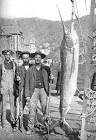
(The record swordfish from 1903, 150 pounds, Catalina Island, California)
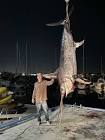
(Luc Oldfield with the current California state record swordfish, 663.9 pounds, October 20, 2024, San Diego, California)
“The Party told you to reject the evidence of your eyes and ears. It was their final, most essential command.”
― From “1984”, by George Orwell, 1949
From 1903 to 1913, the size of the largest swordfish caught in the Pacific Ocean off Santa Catalina Island in Southern California increased by 184%, or by almost three times, from 125 pounds (Llewellyn) to 355 pounds (Boschen).
This is a hyper-exponential increase in size which cannot be explained by Charles Darwin’s theory of “Natural Selection” and “survival of the fittest”.
From 1903 to 1905, for a period of two years, the swordfish was present in the Pacific Ocean off Santa Catalina Island in Southern California.
In 1903, after an absence of seven years, the swordfish reappeared in the Pacific Ocean off Santa Catalina Island in Southern California at a weight of 125 pounds, as the health of the ether improved to the point where the species could once again manifest within it, remained in existence there for two years, and then disappeared in 1905, or soon after.
- In 1903, after an absence of seven years, the swordfish reappeared in the Pacific Ocean off Santa Catalina Island in Southern California at a weight of 125 pounds, as the health of the ether improved to the point where the species could once again manifest within it. It was caught, killed and eaten by an Illuminist “sport” fisherman named Edward Llewellyn. The swordfish would remain in existence there for the next two years, from 1903 through 1905.
(Record swordfish, Catalina Island, California, 1903, 125 pounds)
From 1904 to 1906, the swordfish was present in the Pacific Ocean off San Nicolas Island in Southern California for a period of two years.
From 1904 to 1906, the two-year manifestation of the swordfish in the Pacific Ocean off San Nicholas Island was identical to its two-year manifestation off Santa Catalina Island from 1903 to 1905.
In 1904, the swordfish appeared in the Pacific Ocean off San Nicholas Island in Southern California, where it had never been documented previously, remained in existence there for two years, and then disappeared in 1906, or soon after.
In 1904, the swordfish was present in the Pacific Ocean off Santa Catalina Island in Southern California for the second straight year.
- In 1904, the swordfish, described only as “very large”, appeared in the Pacific Ocean off San Nicolas Island in Southern California, where it had never been documented previously, as the health of the ether improved to the point where the species could manifest within it. Described only as “very large”, it was sighted by Captain Swenson of the power-launch Leone.
This four-year disappearance in the absence of a “sport” fishing killing documents the swordfish being driven out of existence simply by the degradation of the health of the ether by the low-wavelength radiation from what we collectively refer to as technology.
-
In 1904, “large numbers” of swordfish were sighted in the Pacific Ocean off Santa Catalina Island in Southern California.
-
In 1904, Mr. and Mrs. M. Garrett hooked a “big” swordfish in the Pacific Ocean off Santa Catalina Island in Southern California, but the line broke.
From 1905 to 1913, the swordfish is absent from the record in the Pacific Ocean off Santa Catalina Island for a period of eight years.
From 1905 to 1913, the eight-year absence of the swordfish from the Pacific Ocean off Santa Catalina Island was 60% greater, or almost two thirds greater than its five-year absence from 1898 to 1903.
This exponential increase in the length of the absence of the swordfish documents the degradation of the health of the ether by the low-wavelength microwave radiation from what we collectively refer to as technology.
From 1905 to 1909, the swordfish is absent from the record in the Pacific Ocean off San Nicolas Island in Southern California for a period of four years.
From 1905 to 1909, the four-year absence of the swordfish from the Pacific Ocean off San Nicolas Island was identical to its consecutive four-year absences from the Pacific Ocean off San Miguel Island from 1886 to 1890 and from 1890 to 1894.
From 1905 to 1908, the swordfish is absent from the record for a period of three years.
From 1905 to 1908, the three-year absence of the swordfish is statistically very similar to its identical four-year absences off San Miguel Island from 1886 to 1890 and from 1890 to 1894, and statistically similar to its identical two-year absences from 1894 to 1896 and from 1896 to 1898.
-
In 1905, William Moncrieffe and Lee Ballington sighted a “big” swordfish in the Pacific Ocean off Santa Catalina Island in Southern California.
-
In 1905, Captain Haron Rock and Frank Knott of New York and Cameron Rogers sighted a swordfish in the Pacific Ocean off Santa Catalina Island, no weight or size estimate.
-
In 1905, “for several weeks” in October, “large numbers” of swordfish were battling whales in the channel in the Pacific Ocean off Santa Catalina Island in Southern California.
In 1905, “many” dead killer whales were floating in the channel off San Nicolas Island, which documents the existence of the swordfish there.
From 1908 to present, the swordfish is absent from the record in the Pacific Ocean off Anacapa Island in Southern California.
From 1908 to 1910, the swordfish was present off San Clemente Island for a period of two years.
From 1908 to 1910, the two-year manifestation of the swordfish off San Clemente Island was identical to its two-year manifestation off Santa Catalina Island from 1903 to 1905.
In 1908, the swordfish simultaneously appeared in the Pacific Ocean off Anacapa Island and San Clemente Island in Southern California for the first time in history. It disappeared from Anacapa Island almost immediately, and disappeared from San Clemente Island two years later, in 1910.
-
In 1908, the swordfish appeared in the Pacific Ocean off San Clemente Island in Southern California, where it had never been documented previously, as the health of the ether improved to the point where the species could manifest within it. A “huge” swordfish was sighted by “local fishermen”, and numerous boats were speared by swordfish.
-
In 1908, A fisherman named Joe’s boat was speared by a “gigantic” swordfish in the Pacific ocean off San Clemente Island.
-
In 1908, the swordfish appeared in the Pacific Ocean off Anacapa Island in Southern California, where it had never been documented previously, at a weight of 600 pounds (estimated), as the health of the ether improved to the point where the species could manifest within it. An Illuminist “sport” fisherman named C.G. Conn hooked it, but the line broke.
From 1909 to present, the swordfish is absent from the record in the Pacific Ocean off San Nicolas Island in Southern Califorina.
This disappearance in the absence of a “sport” fishing killing documents the swordfish being driven out of existence simply by the degradation of the health of the ether by the low-wavelength radiation from what we collectively refer to as technology.
From 1909 to 1914, the maximum size of the swordfish caught in the Pacific Ocean off San Clemente Island in Southern California increased by an annual average of 2.3%.
From 1909 to 1914, the maximum size of the swordfish caught in the Pacific Ocean off San Clemente Island in Southern California increased by 11.6%, from 180 pounds (Pinchot) to 201 pounds (McMillan).
From 1909 to 1910, the maximum size of the swordfish caught in the Pacific Ocean off San Clemente Island in Southern California increased by 2.3% (average).
From 1909 to 1910, the maximum size of the swordfish caught in the Pacific Ocean off San Clemente Island in Southern California increased in size by 38.8%, or by more than one third, from 180 pounds (Pinchot) to 250 pounds (Pinchot).
This is a hyper-exponential increase in size which cannot be explained by Charles Darwin’s theory of “Natural Selection” and “survival of the fittest”.
In 1909, after an absence of four years, the swordfish reappeared in the Pacific Ocean off San Nicolas Island in Southern California, as the health of the ether improved to the point where the species could once again manifest within it. It would remain in existence there only briefly. In 1909, or soon after, the swordfish disappeared from the Pacific Ocean off San Nicolas Island in Southern California, and remains absent to this day.
-
In 1909, after an absence of four years, the swordfish reappeared in the Pacific Ocean off San Nicolas Island in Southern California, where it last been documented in 1905, as the health of the ether improved to the point where the species could once again manifest within it. “Five boys” witnessed a fight between a whale, a thresher shark and a swordfish.
-
In 1909, an Illuminist “sport” fisherman named Gifford Pinchot caught and killed a 180-pound swordfish in the Pacific Ocean off San Clemente Island in Southern California.
From 1910 to 1914, the swordfish was absent from the record in the Pacific Ocean off San Clemente Island in Southern California for a period of four years.
From 1910 to 1914, the maximum size of the swordfish caught in the Pacific Ocean off San Clemente Island decreased by 19.6%, or by basically one fifth, from 250 pounds (Pinchot) to 201 pounds (McMillan).
This documents the degrading of the health of the ether by the low-wavelength microwave radiation from what we collectively refer to as technology.
From 1910 to 1913, the swordfish is absent from the record for a period of three years.
From 1910 to 1913, the three-year absence of the swordfish was identical to its three-year absence from 1905 to 1908, and was statistically very similar to its identical four-year absences off San Miguel Island from 1886 to 1890 and from 1890 to 1894, and statistically similar to its identical two-year absences from 1894 to 1896 and from 1896 to 1898.
From 1910 to 1911, the maximum size of the swordfish caught in the Pacific Ocean off San Clemente Island in Southern California increased by 2.3% (average).
- In 1910, an Illuminist “sport” fisherman named Gifford Pincho caught and killed a 250-pound swordfish in the Pacific Ocean off San Clemente Island in Southern California.
From 1911 to 1912, the maximum size of the swordfish caught in the Pacific Ocean off San Clemente Island in Southern California increased by 2.3% (average).
From 1912 to 1913, the maximum size of the swordfish caught in the Pacific Ocean off San Clemente Island in Southern California increased by 2.3% (average).
From 1913 to 1917, the swordfish was present off Santa Catalina Island for a period of four years.
From 1913 to 1917 the four-year manifestation of the swordfish in the Pacific Ocean off Santa Catalina Island was 100% greater, or two times greater than its identical two-year manifestations off Santa Catalina Island from 1903 to 1905, off San Nicolas Island from 1904 to 1906, and off San Clemente Island from 1908 to 1910.
This documents the fact that, from 1913 to 1917, the health of the ether in Southern California was improving at a rate exponentially greater than that at which the nascent technologies of the day were able to degrade it.
From 1913 to 1915, the weight of the largest swordfish caught in the Pacific Ocean off Santa Catalina Island in Southern California decreased by 19.7%, or by almost one fifth, from 355 pounds (Boschen, world record) to 285 pounds (Boschen, the only swordfish caught off Santa Catalina Island that year).
From 1913 to 1914, the maximum size of the swordfish caught in the Pacific Ocean off San Clemente Island in Southern California increased by 2.3% (average).
In 1913, after an absence of eight years, the swordfish reappeared in the Pacific Ocean off Santa Catalina Island in Southern California, as the health of the ether improved to the point where the species could once again manifest within it. It would remain in existence there for four years, until it disappeared again in 1917, or soon after.
- In 1913, after an absence of eight years, the swordfish reappeared in the Pacific Ocean off Santa Catalina Island at a weight of 355 pounds, as the health of the ether improved to the point where the species could once again manifest within it. An Illuminist “sport” fisherman named W.C. Boschen caught it, killed it, and ate it.
This is just the nineteenth example of the swordfish ever documented.
Per thehistoryofsportsfishing on Facebook in October 7, 2024, “History in the making! Back in 1913, W.C. Boschen and Captain George Farnsworth made waves by landing the first-ever broadbill swordfish using rod and reel off Catalina Island. Weighing in at 355 lbs and fought for an epic 92 minutes, this catch set the standard for big game fishing. This moment truly marked the birth of a new era in sportfishing.”
Where “truly” casts doubt, and where “the first-ever broadbill swordfish using rod and reel off Catalina Island” is blatantly false, given the fact that Edward Llewellyn caught a world-record 125-pound swordfish off Santa Catalina Island in 1903, as we reviewed previously.
Here’s a picture from islapedia.com, where both Farnsworth and Coon/Conn(?) are pointedly holding their rods with their left hands.
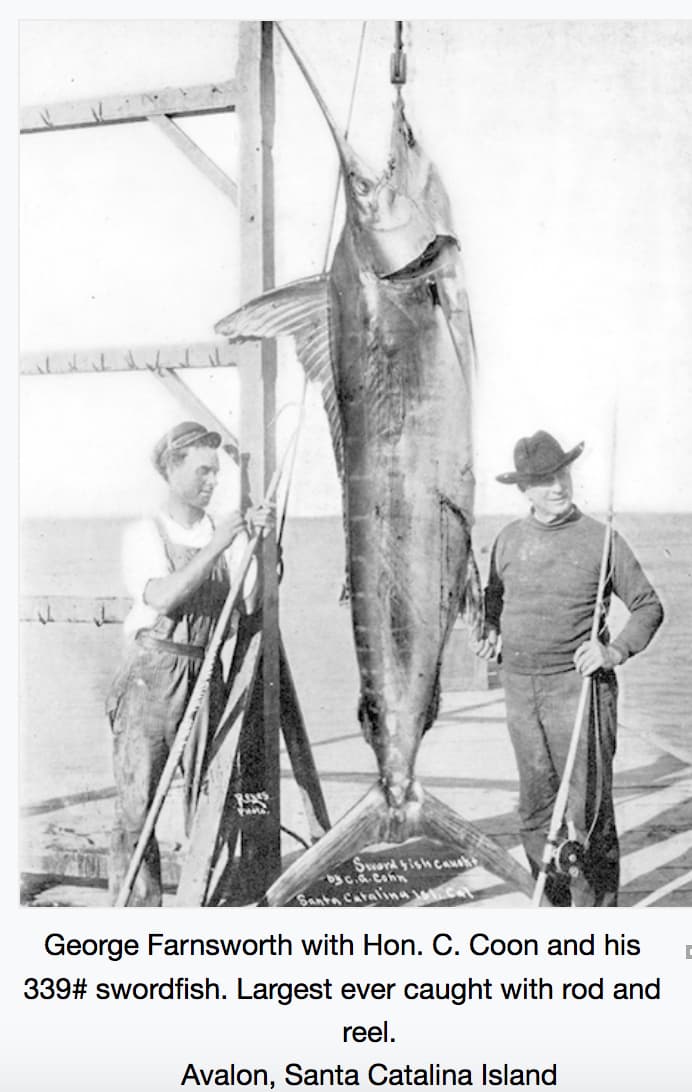
(George Farnsworth with Hon. C. Conn and his 339# swordfish, Avalon, Santa Catalina Island)
They’re holding the rods in their left hands to send a message to the Faithful that they are followers of the Left-Hand Path.
From 1914 to 1915, the maximum size of the swordfish caught in the Pacific Ocean off Santa Catalina Island decreased by %, from 340 pounds (Evans) to
From 1914 to 1915, the maximum size of the swordfish caught in the Pacific Ocean off San Clemente Island increased by 57.2%, or by more than half, from 201 pounds (McMillan) to 316 pounds (Grey).
This is a hyper-exponential increase in size which cannot be explained by Charles Darwin’s theory of “Natural Selection” and “survival of the fittest”.
From 1914 to 1915, the 57.2% increase in the maximum size of the swordfish caught in the Pacific Ocean off San Clemente Island off Southern California was 2,386% greater, or almost twenty five times greater than its 2.3% average annual increase in size from 1909 to 2014.
Here, we’ve seen the swordfish appear in the Pacific Ocean off San Clemente Island in Southern California in 1908, and then increase is size hyper-exponentially over the next seven years, until its disappearance in 1915.
From 1914 to 1915, the number of swordfish caught in the Pacific Ocean off Santa Catalina Island decreased by 88.8%, or by an almost infinite amount, from nine to one.
Here we see the swordfish appear in the environment, only to be eradicated by the relentless “sport” fishing of a small cabal of bloodline-linked Illuminists.
From 1914 to 1915, the number of swordfish caught in the Pacific Ocean off San Clemente Island increased by 400%, or by five times, from 1 to 5.
In 1914, the swordfish was present in the Pacific Ocean off Santa Catalina Island and San Clemente Island in Southern California.
In 1914, the year it reappeared there for the first time in four years, the number of swordfish caught in the Pacific Ocean off San Clemente Island was one.
In 1914, the number of swordfish caught in the Pacific Ocean off Santa Catalina Island in Southern California was nine (Stearns, Kahn, Evans, Boschen, Boschen, Boschen, Boschen, Boschen, Boshen).
In 1914, the nine swordfish caught in the Pacific Ocean off Santa Catalina Island in Southern California were 800% greater, or nine times greater than the single swordfish caught off San Clemente Island.
Yet Santa Catalina Island and San Clemente Island are separated by just 46.47 miles.
Why are the swordfish off Santa Catalina Island nine times more plentiful than they are off San Clemente Island, which is less than fifty miles away?
In 1914, the weight of the single swordfish caught off San Clemente Island was 201 pounds.
In 1914, the weight of the three swordfish caught off Santa Catalina Island for which weights are available averaged 283 pounds.
In 1914, the 283-pound average weight of the three swordfish caught off Santa Catalina Island for which weights are available was 40.8% greater, or almost half again greater than the 201-pound weight of the single swordfish caught off San Clemente Island.
Yet Santa Catalina Island and San Clemente Island are separated by just 46.47 miles.
Why are the swordfish off Santa Catalina Island on average more than one third larger of those off San Clemente Island, which is less than fifty miles away?
The swordfish first appeared off Santa Catalina Island in 1896, and did not make its first appearance off San Clemente Island until 1908.
I believe that this statistic shows that the swordfish reappeared off San Clemente Iwas smaller when it had just reappeared in the environment in the Pacific Ocean off San Clemente Island, prior to its increasing exponentially in size.
In 1914, the weight of the largest swordfish caught in the Pacific Ocean off Santa Catalina Island was pounds (340 pounds, Boschen, world record).
In 1914, Two Illuminist “sport” fishermen named George Farnsworth and Col. John Stearns caught a 292-pound swordfish in the Pacific Ocean off Catalina Island in Southern California. It took them just 25 minutes to catch it and kill it. Then they ate it.
Here’s a postcard of it postmarked March 22, 1915, where Stearns and Farnsworth are both pointedly holding their rods in their left hands, just as Farnsworth and Coon are in the photo from 1913 which we reviewed previously.
This documents the fact that Coon, Stearns and Farnsworth are all followers of the Left-Hand Path. They are literally blood-drinking Illuminists. They are generational Satanist Freemasons.
Here I will note that every swordfish seen or caught got a newspaper article, and, often, a post card.
-
In 1914, an Illuminist “sport” fisherman named Colonel John Stearns caught and killed a 292-pound swordfish in the Pacific Ocean off Santa Catalina Island in Southern California.
-
In 1914, after an absence of four years, the swordfish reappeared in the Pacific Ocean off San Clemente Island in Southern California at a weight of 201 pounds, as the health of the ether improved to the point where the species could once again manifest within it. An Illuminist “sport” fisherman named N.B. McMillan caught it, killed it, and ate it.
-
In 1914, an Illuminist “sport” fisherman named Felix Kahn caught and killed a 217-pound swordfish in the Pacific Ocean off Santa Catalina Island in Southern California.
-
In 1914, an Illuminist “sport” fisherman named William G. Evans caught and killed a 340-pound swordfish in the Pacific Ocean off Santa Catalina Island in Southern California.
-
In 1914, an Illuminist “sport” fisherman named W.C. Boschen caught and killed a swordfish in the Pacific Ocean off Santa Catalina Island in Southern California.
-
In 1914, an Illuminist “sport” fisherman named W.C. Boschen caught and killed a swordfish in the Pacific Ocean off Santa Catalina Island in Southern California.
-
In 1914, an Illuminist “sport” fisherman named W.C. Boschen caught and killed a swordfish in the Pacific Ocean off Santa Catalina Island in Southern California.
-
In 1914, an Illuminist “sport” fisherman named W.C. Boschen caught and killed a swordfish in the Pacific Ocean off Santa Catalina Island in Southern California.
-
In 1914, an Illuminist “sport” fisherman named W.C. Boschen caught and killed a swordfish in the Pacific Ocean off Santa Catalina Island in Southern California.
-
In 1914, an Illuminist “sport” fisherman named W.C. Boschen caught and killed a swordfish in the Pacific Ocean off Santa Catalina Island in Southern California.
From 1915 to 1916, the maximum size of the swordfish caught in the Pacific Ocean off Santa Catalina Island in Southern California increased by 54.5%, or by more than half, from 285 pounds (Boschen) to 440 pounds (Suich).
From 1915 to 1916, the maximum size of the swordfish caught in the Pacific Ocean off San Clemente Island in Southern California increased by %, from 316 pounds (Grey, world record) to Y.
In 1915, the swordfish was present in the Pacific Ocean off San Clemente Island for the second straight year. It would disappear the next year, remain absent for six years, reappear, be killed off by Dr. Aubrey Wilborn, and remains absent from the Pacific Ocean off San Clemente to this day.
In 1915, the swordfish was present in the Pacific Ocean off Santa Catalina Island in Southern California for the third straight year. It would disappear two years later, in 1917, then reappear in 1925, manifest there for two years, then disappear again, and remain absent for almost one hundred years, until it reappeared there in 2023.
In 1915, the number of swordfish caught in the Pacific Ocean off Santa Catalina Island was one (Boschen).
In 1915, the number of swordfish caught in the Pacific Ocean off San Clemente Island was five (Grey, Patton, Grey, Burman, Grey).
In 1915, the five swordfish caught in the Pacfic Ocean off San Clemente Island were 400% greater, or five times greater than the single swordfish caught off Santa Catalina Island.
Yet, just the previous year, the nine swordfish caught in the Pacific Ocean off Santa Catalina Island in Southern California were 800% greater, or nine times greater than the single swordfish caught off San Clemente Island. What gives?
During this two-year manifestation off Santa Catalina Island, the suddenly-plentiful swordfish was eradicated by the relentless pressure of Illuminist “sport” fishing.
-
In 1915, an Illuminist “sport” fisherman named W.C. Boschen caught and killed a 285-pound swordfish in the Pacific Ocean off Santa Catalina Island in Southern California.
-
In 1915, an Illuminist “sport” fisherman named Zane Grey caught and killed a 110-pound swordfish in the Pacific Ocean off San Clemente Island in Southern California.
-
In 1915, an Illuminist “sport” fisherman named G.S. Patton caught and killed a 115-pound swordfish in the Pacific Ocean off San Clemente Island in Southern California.
-
In 1915, an Illuminist “sport” fisherman named Zane Grey caught and killed a 138-pound swordfish in the Pacific Ocean off San Clemente Island in Southern California.
-
In 1915, an Illuminist “sport” fisherman named Fred Burman caught and killed a 173-pound swordfish in the Pacific Ocean off San Clemente Island in Southern California.
-
In 1915, an Illuminist “sport” fisherman named Zane Grey caught and killed a world-record 316-pound swordfish in the Pacific Ocean off San Clemente Island in Southern California.
From 1915 to 1921, the maximum size of the swordfish off San Clemente Island decreased by an annual average of 5.9%.
From 1915 to 1921, the maximum size of the swordfish off Santa Clemente Island decreased by 35.1%, from 316 pounds (Grey) to 205 pounds (Wilborn).
This documents the degradation of the health of the ether by the low-wavelength microwave radiation from what we collectively refer to as technology.
From 1915 to 1916, the number of swordfish caught in the Pacific Ocean off San Clemente Island in Southern California decreased by an infinite amount, from one to zero.
This documents the disappearance of the swordfish from the Pacific Ocean off San Clemente Island 1916.
From 1915 to 1916, the maximum size of the swordfish off San Clemente Island decreased by 5.9% (average).
From 1915 to 1916, the number of swordfish caught in the Pacific Ocean off San Clemente Island in Southern California decreased by an infinite amount, from one to zero.
This documents the disappearance of the swordfish from the Pacific Ocean off San Clemente Island 1916.
In 1915, the swordfish was present in the Pacific Ocean off Santa Catalina Island and San Clemente Island in Southern California. It would remain absent for five years, until it reappeared there in 1921.
In 1915, during the second year of its two-year manifestation there, the number of swordfish caught in the Pacific Ocean off San Clemente Island was five.
In 1915, the average weight of the swordfish caught off San Clemente Island in Southern California was 174 pounds.
In 1915, the weight of the single swordfish caught off San Clemente Island in Southern California was 285 pounds.
In 1915, the 285-pound weight of the single swordfish caught off Santa Catalina Island Clemente Island was 63.7% greater, or almost two thirds greater than the 174-pound weight of the five swordfish caught off San Clemente Island.
Yet Santa Catalina Island and San Clemente Island are separated by just 46.47 miles.
Why are the swordfish off Santa Catalina Island on average more than almost two thirds larger of those off San Clemente Island, which is less than fifty miles away?
The swordfish first appeared off Santa Catalina Island in 1896, and did not first appear off Santa Catalina Island until 1908.
I believe that this statistic shows that the swordfish was smaller when it had just reappeared in the environment in the Pacific Ocean off San Clemente Island, prior to its increasing exponentially in size.
In 1915, the 63.7% positive variance in the weight of the swordfish caught off Santa Catalina Island versus San Clemente Island was 56.1% greater, or more than half again greater than its 40.8% positive variance in 1914. Here, from 1914 to 1915, the weight of the swordfish in the Pacific Ocean off Santa Catalina Island in Southern California increasing at an exponentially greater rate than it is off San Clemente Island.
From 1916 to 1921, the swordfish is absent from the record in the Pacific Ocean off San Clemente Island in Southern California.
From 1916 to 1918, the weight of the swordfish caught off Santa Catalina Island decreased by an annual average of 10.4%
And this while the swordfish off San Clemente Island increased in size by an annual average of 3% during the same time period.
From 1916 to 1918, the average weight of the swordfish caught off Santa Catalina Island decreased by 20.8%, from 393 pounds (average) to 311 pounds.
From 1916 to 1917, the maximum weight of the swordfish off San Clemente Island decreased by 5.9% (average).
From 1916 to 1917, the average weight of the swordfish caught off Santa Catalina Island increased by 12.6%, from 393 ounds to 442.5 pounds.
From 1916 to 1917, the maximum weight of the swordfish caught in the Pacific Ocean off Santa Catalina Island increased by 5.2%, from 440 pounds (world record, Suich) to 463 pounds (world record, Boschen).
From 1916 to 1917, the number of swordfish caught and killed in the Pacific Ocean off Santa Catalina Island in Southern California decreased by 33.3%, or by one third, from three to two.
In 1916, the weight of the three swordfish caught off Santa Catalina Island averaged 393 pounds.
In 1916, or soon after, after a two-year manifestation there, the swordfish disappeared from the Pacific Ocean off San Clemente Island. It would remain absent for five years, until it reappeared there in 1921.
In 1916, the swordfish is absent from the record in the Pacific Ocean off San Clemente Island in Southern California.
In 1916, three swordfish were caught and killed in the Pacific Ocean off Santa Catalina Island in Southern California.
-
In 1916, an Illuminist “sport” fisherman named Hugo Johnstone caught and killed a 363-pound, world-record swordfish in the Pacific Ocean off Santa Catalina Island in Southern California.
-
In 1916, an Illuminist “sport” fisherman named W.H. Adams caught and killed a 377-pound, world-record swordfish in the Pacific Ocean off Southern California.
-
In 1916, an Illuminist “sport” fisherman named Martin Suich caught and killed a 440-pound, world-record swordfish in “in the channel” in the Pacific Ocean off Southern California.
-
In 1916, an Illuminist “sport” fisherman named A.C. Coy hooked a “good sized” swordfish in the Pacific Ocean off Santa Catalina Island, but the line broke.
-
In 1916, per the TI/Avalon newspaper, the Pacific Ocean off San Clemente Island was “literally alive with swordfish”.
When, in fact, from 1915 to 1916, the number of swordfish caught in the Pacific Ocean off San Clemente Island in Southern California decreased by an infinite amount, from one to zero. This documents the disappearance of the swordfish from the Pacific Ocean off San Clemente Island 1916.
As you can see, “literally alive” is Mil-speak for “dead”, or “absent from this plane of existence”.
This fortieth example of the swordfish ever documented is a fabricated example of the swordfish, put forward as part of a larger Confidence game to obscure the fact that the swordfish had been driven out of existence in the Pacific Ocean off San Clemente Island by Illuminist “sport” fishing and the degradation of the health of the ether by the low-wavelength microwave radiation from what we collectively refer to as technology.
I have exposed the duplicity of the TI/Avalon Newspaper by using what was known in the old days as “fact checking”.
From 1917 to 1918, the maximum weight of the swordfish off San Clemente Island decreased by 5.9% (average).
From 1917 to 1918, the maximum weight of the swordfish caught off Santa Catalina Island decreased by 32.8%, or by almost one third, from 463 pounds (Boschen) to 311 pounds (Jump).
From 1917 to 1918, the 32.8% decrease in the weight of the swordfish caught off Santa Catalina Island was 215.4% greater, or more than three times greater than its 10.4% (average) decrease from 1916 to 1917.
This exponential decrease in the weight of the swordfish off Santa Catalina Island from 1916 to 1918 documents the degradation of the health of the ether by the low-wavelength microwave radiation from what we collectively refer to as technology.
From 1917 to 1918, the number of swordfish caught in the Pacific Ocean off Santa Catalina Island decreased by 50%, or by half, from two to one.
From 1917 to 1918, the 50% decrease in the number of swordfish caught in the Pacific Ocean off Santa Catalina Island was 51.5% greater, or more than half again greater than its 33% decrease from 1916 to 1917.
In 1917, the swordfish was present in the Pacific Ocean off Santa Catalina Island in Southern California.
In 1917, the number of swordfish caught in the Pacific Ocean off Santa Catalina Island in Southern California was two.
In 1917, the weight of the two swordfish caught off Santa Catalina Island averaged 442.5 pounds.
In 1917, or soon after, the swordfish disappeared from the Pacific Ocean off Santa Catalina Island in Southern California. It would remain absent for eight years, until it reappeared there in 1925.
-
In 1917, an Illuminist “sport” fisherman named W.C. Boschen caught and killed a 463-pound swordfish off Santa Catalina Island.
-
In 1917, an Illuminist “sport” fishermand named A.C. Parsons caught and killed a 422-pound swordfish in the Pacific Ocean off Southern California.
From 1918 to 1920, the swordfish is absent from the record for a period of two years.
From 1918 to 1920, the two-year absence of the swordfish was identical to its two-year absences from 1894 to 1896 and from 1896 to 1898.
From 1918 to 1919, the maximum size of the swordfish off San Clemente Island decreased by 5.9% (average).
In 1918, the number of swordfish caught in the Pacific Ocean off Santa Catalina Island was one.
- In 1918, an Illuminist “sport” fisherman named James W. Jump caught and killed a 311-pound swordfish in the Pacific Ocean off Santa Catalina Island in Southern California. It would remain absent from that locale for seven years, until it reappeared there in 1925.
From 1919 to 1920, the maximum size of the swordfish off San Clemente Island decreased by 5.9% (average).
In 1919, the swordfish is absent from the record.
From 1920 to present, the swordfish is absent from the record in the Pacific Ocean off Santa Cruz Island in Southern California.
From 1920 to 1921, the maximum size of the swordfish off San Clemente Island decreased by 5.9% (average).
- In 1920, the swordfish appeared in the Pacific Ocean off Santa Cruz Island in Southern California, where it had never been documented previously, as the health of the ether improved to the point where the species could manifest within it. A swordfish speared Captain Ira K. Eaton’s boat. Then the swordfish remains absent from the record off Santa Cruz Island to this day.
This permanent disappearance of the swordfish in the absence of a “sport” fishing killing documents the species being driven out of existence off Santa Cruz Island simply by the degradation of the health of the ether by the low-wavelength radiation from what we collectively refer to as technology.
- In 1921, after an absence of five years, the swordfish reappeared in the Pacific Ocean off San Clemente Island in the Pacific Ocean at a weight of 205 pounds, as the health of the ether improved to the point where the species could once again manifest within it. An Illuminist “sport” fisherman named Dr. Aubrey Wilborn caught it, killed it, and ate it, and the swordfish remains absent from the Pacific Ocean off San Clemente to this day.
From 1925 to 1927, swordfish was present in the Pacific Ocean off Santa Catalina Island in Southern California for a period of two years.
From 1925 to 1927, the two-year manifestation of the swordfish in the Pacific Ocean off Santa Catalina Island in Southern California was identical to its two-year manifestation off San Clemente Island from 1908 to 1910 and its two-year manifestation off Santa Catalina Island from 1903 to 1905.
From 1925 to 1926, the swordfish in the Pacific Ocean off Santa Catalina Island in Southern California increased in size by 1.9%, from 571 pounds (unknown) to 582 pounds (Grey).
-
In 1925 (estimated), after an absence of seven years, the swordfish reappeared in the Pacific Ocean off Santa Catalina Island in Southern California, at a world-record weight of 571 pounds, as the health of the ether improved to the point where the species could once again manifest within it. It was caught and killed by an undocumented Illuminist “sport” fisherman and memorialized on a postcard.
-
In 1926, an Illuminist “sport” fisherman named Zane Grey caught and killed a world-record, 582-pound swordfish in the Pacific Ocean off Santa Catalina Island in Southern California, as the health of the ether improved to the point where the species could once again manifest within it. It then remained absent for ninety seven years, until it reappeared in the Pacific Ocean off Santa Catalina Island in 2023, as the health of the ether improved to the point where the species could once again manifest within it.
On June 29, 1926, Zane Gray caught the new world record swordfish in the Pacific Ocean off Santa Catalina Island. It weighed 582 pounds.
This brings the total number of swordfish ever documented to forty seven.
Here’s a picture of Mr. Gray with the swordfish he’s just killed, where he’s pointedly holding the rod in his left hand.
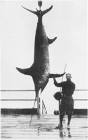
(Zane Grey with a swordfish he caught and killed in 1926 in the Pacific Ocean off Santa Catalina Island)
From 1926 to 2023, verifiable examples of the swordfish in the Pacific Ocean off Santa Catalina Island are absent from the record.
From 1926 to 1953, verifiable examples of the swordfish are absent from the record.
During this time period, the species had been completely eradicated by Illuminist “sport” fishing and the low-wavelength microwave radiation from what we collectively refer to as technology.
From 1927 to 1953, 66%, or 2 of the 3 examples of the swordfish in the historical record are fabricated, e.g., cannot be verified by contemporary news articles or photographs (1928, Anacapa Island; 1931, Anacapa Island).
-
In 1928, a “large swordfish” was purportedly sighted by “a party of men piloted my Manuel Sousa” in the Pacific Ocean off Anacapa Island in Southern California. However, no swordfish have ever been caught there. It is a fabricated example of the swordfish, put forward to obscure the fact that the swordfish had been driven out of existence by “sport” fishing and the low-wavelength microwave radiation from what we collectively refer to as technology.
-
In 1931, the Pacific Ocean off Anacapa Island in Southern California was “said to be the best swordfishing water in this area”. However, no swordfish have ever been caught there. It is a fabricated example of the swordfish, put forward to obscure the fact that the swordfish had been driven out of existence by “sport” fishing and the low-wavelength microwave radiation from what we collectively refer to as technology.
-
In 1952, per Claude H. “Grits” Gresham, a swordfish was caught in the Gulf of Mexico. However, no angler was named, and no weight was provided, and no photographs were taken, and there are no contemporary news accounts documenting the catch. It is , no weight provided; a swordfish was caught, ; unverifiable, a fabricated example of the swordfish, put forward to obscure the fact that the swordfish had been driven out of existence by “sport” fishing and the low-wavelength microwave radiation from what we collectively refer to as technology.
-
In 1953, the swordfish appeared in the Pacific Ocean off Iquique, Chile, where it had never been documented previously, at a weight of 1,182 pounds, the world record, as the health of the ether improved to the point where the species could manifest within it. An Illuminist “sport” fisherman named Lou Marron caught it and killed it, and it remains absent from that location to this day.
From 1958 to 2009, 100%, or 17 of the 17 examples of the swordfish in the historical record are fabricated, e.g., cannot be verified by contemporary news articles or photographs
(1958, San Clemente Island; 1972, New Hampshire state record; 1978, Delaware state record; 1978, Florida state record; 1978, Virginia state record; 1980, North Carolina state record; 1980, Georgia state record; 1980, Louisiana state record; 1980, Alabama state record; 1996, Australian record; 2003, California state record; 2003, Florida; 2005, Alabama state record; 2006, Alabama state record; 2007, Mississippi state record; 2008, Louisiana; 2009, Texas state record.)
During this time period, the species had been completely eradicated by Illuminist “sport” fishing and the low-wavelength microwave radiation from what we collectively refer to as technology.
-
In 1958, “an angler” purportedly caught a 337-pounds, 12-ounce swordfish in the Pacific Ocean off San Clemente Island. However, this claim cannot be substantiated by contemporary news articles or photographs. It is a fabricated example of the swordfish, put forward to obscure the fact that the swordfish had been driven out of existence by “sport” fishing and the low-wavelength microwave radiation from what we collectively refer to as technology.
-
In 1972, a 646-pound New Hamphsire state record swordfish was purportedly caught in the Atlantic Ocean and “sold to a licensed fish buyer”. However, no angler name was provided, and there are no contemporary news articles or photographs documenting the catch. It is a fabricated example of the swordfish, put forward to obscure the fact that the swordfish had been driven out of existence by “sport” fishing and the low-wavelength microwave radiation from what we collectively refer to as technology. The swordfish would make its first verifiable appearance in the Atlantic Ocean off New Hampshire in 2018.
-
In 1978, a 276-pound, 12-ounce Delaware state record was purportedly caught in the Atlantic Ocean by Albert Scott. However, this claimed record be substantiated by contemporary news accounts or photographs. It is a fabricated example of the swordfish, put forward as part of a larger Confidence game to obscure the fact that the species had been driven out of existence by the low-wavelength microwave radiation from what we collectively refer to as technology. The swordfish would make its first verifiable appearance in the Atlantic Ocean off Delaware in 2014.
-
In 1978, a 612.75-pound Florida state record swordfish was purportedly caught in the Atlantic Ocean by Stephen Stanford. However, this claimed record be substantiated by contemporary news accounts or photographs. It is a fabricated example of the swordfish, put forward as part of a larger Confidence game to obscure the fact that the species had been driven out of existence by the low-wavelength microwave radiation from what we collectively refer to as technology. The swordfish would make its first verifiable appearance in the Atlantic Ocean off Florida in 2019.
-
In 1978, a 381-pound, 8-ounce Virginia state record swordfish was purportedly caught in the Atlantic Ocean by James Alexander. However, this claimed record be substantiated by contemporary news accounts or photographs. It is a fabricated example of the swordfish, put forward as part of a larger Confidence game to obscure the fact that the species had been driven out of existence by the low-wavelength microwave radiation from what we collectively refer to as technology. The swordfish would make its first verifiable appearance in the Atlantic Ocean off Virginia in 2018.
-
In 1980, a 441-pound North Carolina state record swordfish was purportedly caught in the Atlantic Ocean by J. Horace Murray. However, this claimed record be substantiated by contemporary news accounts or photographs. It is a fabricated example of the swordfish, put forward as part of a larger Confidence game to obscure the fact that the species had been driven out of existence by the low-wavelength microwave radiation from what we collectively refer to as technology. The swordfish would make its first verifiable appearance in the Atlantic Ocean off North Carolina in 2018.
-
In 1980, an 86-pound swordfish was purportedly caught in the Atlantic Ocean by W.H. Lippitt. However, this claimed record be substantiated by contemporary news accounts or photographs. It is a fabricated example of the swordfish, put forward as part of a larger Confidence game to obscure the fact that the species had been driven out of existence by the low-wavelength microwave radiation from what we collectively refer to as technology. The swordfish would make its first verifiable appearance in the Atlantic Ocean off Georgia in 2014.
-
In 1980, a 310-pound Louisiana state record swordfish was purportedly caught in the Gulf of Mexico by Thomas Dantin. However, this claimed record be substantiated by contemporary news accounts or photographs. It is a fabricated example of the swordfish, put forward as part of a larger Confidence game to obscure the fact that the species had been driven out of existence by the low-wavelength microwave radiation from what we collectively refer to as technology. The swordfish would make its first verifiable appearance in the Gulf of Mexico off Louisiana in 2019.
-
In 1980, a 10-pound, 14-ounce Alabama state record swordfish was purportedly caught in Weiss Reservoir by Julia Hurley. However, this claimed record cannot be substantiated by contemporary news accounts or photographs. It is a fabricated example of the swordfish, put forward as part of a larger Confidence game to obscure the fact that the species had been driven out of existence by the low-wavelength microwave radiation from what we collectively refer to as technology. The swordfish would make its first verifiable appearance in the Gulf of Mexico off Alabama in 1989.
-
In 1989, the swordfish appeared in the Gulf of Mexico off Louisiana , where it had never been veriably documented previously, at a weight of 779 pounds, as the health of the ether improved to the point where the species could manifest within it. An Illuminist “sport” fisherman named Marcus Kennedy caught and killed the first verifiable example of the swordfish in the historical record since 1952 and had it certified as the Louisiana state record, and the swordfish remains absent from the record off Louisiana to this day.
-
In 1996 a 175-kg Australian record swordfish was purportedly caught in the Pacific Ocean by an unnamed angler. However, the lack of an angler and the fact that this claimed record cannot be substantiated by contemporary news accounts or photographs prove it to be a fabricated example of the swordfish, put forward as part of a larger Confidence game to obscure the fact that the species had been driven out of existence by the low-wavelength microwave radiation from what we collectively refer to as technology. The swordfish would make its first verifiable appearance in the Pacific Ocean off Australia in 2015.
-
In 2003, a 452-pound, 8-ounce California state record swordfish was purportedly caught in the Pacific Ocean by David Denholm. However, this claimed record cannot be substantiated by contemporary news accounts or photographs. It is a fabricated example of the swordfish, put forward as part of a larger Confidence game to obscure the fact that the species had been driven out of existence by the low-wavelength microwave radiation from what we collectively refer to as technology. The swordfish was absent from the record in the Pacific Ocean off California from 1926 to 2023, when it reappeared there at a weight of 663.8 pounds.
-
In 2003, a 757.8-pound swordfish was purportedly caught in the Atlantic Ocean off Florida by Bill and Debbie Lussier. However, this catch cannot be substantiated by contemporary news accounts or photographs. It is a fabricated example of the swordfish, put forward as part of a larger Confidence game to obscure the fact that the species had been driven out of existence by the low-wavelength microwave radiation from what we collectively refer to as technology. The swordfish would make its first verifiable appearance in the Atlantic Ocean off Florida in 2019.
-
In 2005, per Alabama Outdoors in 2026, “an angler” caught the Alabama state record swordfish of unstated weight. However, this catch cannot be substantiated by contemporary news accounts or photographs. It is a fabricated example of the swordfish, put forward as part of a larger Confidence game to obscure the fact that the species had been driven out of existence by the low-wavelength microwave radiation from what we collectively refer to as technology. The swordfish would make its first verifiable appearance in the Gulf of Mexico off Alabama in 2025.
-
In 2006, a 448-pound Alabama state record swordfish was caught in the Gulf of Mexico by Del Sawyer. However, this catch cannot be substantiated by contemporary news accounts or photographs. It is a fabricated example of the swordfish, put forward as part of a larger Confidence game to obscure the fact that the species had been driven out of existence by the low-wavelength microwave radiation from what we collectively refer to as technology. The swordfish would make its first verifiable appearance in the Gulf of Mexico off Alabama in 2025.
-
In 2007, a 75-pound Mississippi state record was caught in the Gulf of Mexico by an unnamed angler. However, the lack of an angler and the fact that this catch cannot be substantiated by contemporary news accounts or photographs prove it to be a fabricated example of the swordfish, put forward as part of a larger Confidence game to obscure the fact that the species had been driven out of existence by the low-wavelength microwave radiation from what we collectively refer to as technology. The swordfish would make its first verifiable appearance in the Gulf of Mexico off Mississippi in 2017.
-
In 2008, a 291-pound swordfish was purportedly caught in the Gulf of Mexico off Louisiana by a Michael Skeedrow. However, this catch cannot be substantiated by contemporary news accounts or photographs. It is a fabricated example of the swordfish, put forward as part of a larger Confidence game to obscure the fact that the species had been driven out of existence by the low-wavelength microwave radiation from what we collectively refer to as technology. The swordfish would make its first verifiable appearance in the Gulf of Mexico off Louisiana in 2019.
-
In 2009, a 326-pound Texas state record swordfish was caught in the Gulf of Mexico by a Shane Babich. However, this catch cannot be substantiated by contemporary news accounts or photographs. It is a fabricated example of the swordfish, put forward as part of a larger Confidence game to obscure the fact that the species had been driven out of existence by the low-wavelength microwave radiation from what we collectively refer to as technology. The swordfish would make its first verifiable appearance in the Gulf of Mexico off Texas in 2013.
-
In 2012, the swordfish appeared in the Atlantic Ocean off Virginia, where it had never been verfiably documented previously, at a weight of 446 pounds, as the health of the ether improved to the point where the species could once again manifest within it. An Illuminist “sport” fisherman named Joseph T. Harris caught it, killed it, had it certified as the first verifiable Virginia state record, and ate it, and the swordfish remains absent from the Atlantic Ocean off Virginia to this day…
-
In 2013, the swordfish appeared in the Gulf of Mexico off Texas at a weight of 493 pounds, where it had never been veriably documented previously, as the health of the ether improved to the point where the species could once again manifest within it. An Illuminist “sport” fisherman named Brett Holden caught it, killed it, had it certified as the Texas state record, and ate it, and the swordfish remains absent from the Gulf of Mexico off Texas to this day.
Here’s a picture of it, where two of the three fishermen are flashing the purportedly-secret Masonic “thumb’s-up” gesture of recognition.
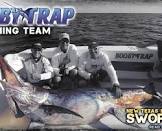
(Brett Holden and the crew of the Booby Trap with the first-ever Texas state record swordfish, 2013)
Now, for any Coincidence theorists lingering in the readership, here is a Satanic-purple Masonic “thumb’s-up” greeting card.

(Satanic-purple Masonic “thumb’s-up” greeting card)
I have included Brett’s photograph so that you could get a better idea of what a generational Satanist Freemason in a position of marginal influence looks like.
They are all related to one another through the maternal bloodline. Generational Satanists comprise between twenty and thirty percent of the populace, and are hiding in plain sight in every city, town and village on Earth. It’s how the few have controlled the many all the way back to Babylon, and before.
But they say that the hardest part of solving a problem is recognizing that you have one.
Don Croft used to say “Parasites fear exposure above all else”.
How long do you think that these people have left in power, now?
Please consider doing what you can to speed the transition.
- In 2014, the swordfish appeared in the Atlantic Ocean off Georgia, where it had never been verifiably documented previously, at a weight of 205 pounds, 8 ounces, as the health of the ether improved to the point where the species could once again manifest within it. An Illuminist “sport” fisherman named Brendin Page caught it, killed it, had it certified as the first-ever Georgia state record swordfish, and ate it, and it remains absent from the Atlantic Ocean off Georgia to this day.
From 2015 to 2018, the swordfish was present in the Pacific Ocean off Southern Australia and Tasmania for a period of three years.
From 2015 to 2018, the three-year manifestation of the swordfish in the Pacific Ocean off Southern Australia and Tasmania was statistically very similar to its two-year manifestation off Santa Catalina Island from 1903 to 1905, its two-year manifestation off San Clemente Island from 1908 to 1910, its two-year manifestation off San Clemente Island from 1908 to 1910, its four-year manifestation off Santa Catalina Island from 1913 to 1917, and its two-year manifestation off Santa Catalina Island from 1925 to 1927.
In 2015, the swordfish was present in the Pacific Ocean off Southern Australia and Tasmania for the first time in history.
- In 2015, the swordfish appeared in the Pacific Ocean off Australia, off Tasmania, where it had never been verfiably documented previously, at a weight of 580 pounds, as the health of the ether improved to the point where the species could once again manifest within it. An Illuminist “sport” fisherman named Kyle Longmore caught it, killed it, had it certfied as the first verifiable Australian record, and ate it.
In 2016, the swordfish was present in the Pacific Ocean off Southern Australia and Tasmania for the second year in a row.
- 2016 - Pacific Ocean, off Tasmania, Australian record, 589 pounds, 8 ounces. An Illuminist “sport” fisher named India Thompson caught it, killed it, had it certfied as the Australian record, and ate it. There are photographs of India with the fish.
From 2017 to 2021, the swordfish was absent from the record from the Gulf of Mexico off Mississippi for a period of four years.
From 2017 to 2021, the four-year absence of the swordfish from the Gulf of Mexico off Mississippi was identical to it’s four-year absence from the Pacific Ocean off San Clemente Island in Southern California from 1910 to 1914.
In 2017, the swordfish was present in the Pacific Ocean off Southern Australia and Tasmania for the third year in a row.
In 2017, the swordfish was present in the Pacific Ocean off Western Australia for the first time in history.
In 2017, the swordfish was present in the Pacific Ocean off New Zealand for the first time in history.
In 2017, the swordfish was present in the Gulf of Mexico off Mississippi for the first time in history.
-
In 2017, the swordfish appeared in the Pacific Ocean off Western Australia, where it had never been documented previously, at a weight of 385.8 pounds, as the health of the ether improved to the point where the species could manifest within it. Unnamed Illuminist “anglers” caught it, killed it, and ate it, and the swordfish remains absent from the Pacific Ocean off Western Australia to this day.
-
In 2017, the swordfish appeared in the Pacific Ocean off New Zealand, where it had never been documented previously, at a weight of 468.2 pounds, as the health of the ether improved to the point where the species could manifest within it. An Illuminist “sport” fisherman named Sam Yendell caught it, killed it, had it certified as the IGFA junior fishing world record, and ate it. And the swordfish remains absent from the Pacific Ocean off New Zealand to this day.
-
In 2017, an Illuminist “sport” fisherman named Dick Brown caught and killed a 608-pound Australian-record swordfish in the Pacific Ocean off Tasmania. There are photographs of Dick with the fish.
-
In 2017, an Illuminist “sport” fisherman named Max Elles caught and killed a 763-pound Australian-record swordfish in the Pacific Ocean off Tasmania. There are photographs of Max with the fish.
-
2017 - After an absence of some indeterminate period of time, the swordfish reappeared in the Gulf of Mexico off Mississippi, where it had never been documented previously, at a weight of 242 pounds, 8.64 ounces, as the health of the ether improved to the point where the species could once again manifest within it. An Illuminist “sport” fisherman caught it, killed it, had it certied as the first verifiable Mississippi state record swordfish, and ate it, and it remains absent from the Gulf of Mexico off Mississippi to this day.
From 2018 to 2022, the swordfish was absent from the record from the Atlantic Ocean off North Carolina for a period of four years.
From 2018 to 2022, the four-year absence of the swordfish from the Atlantic Ocean off North Carolina was identical to its four-year absences from the Pacific Ocean off San Clemente Island in Southern California from 1910 to 1914 and ffrom the Gulf of Mexico off Mississippi from 2017 to 2021.
In 2018, the swordfish was present in the Pacific Ocean off Southern Australia and Tasmania for the fourth year in a row.
In 2018, the swordfish was present in the Atlantic Ocean off North Carolina for the first time in history.
In 2018, the swordfish was present in the Atlantic Ocean off New Hampshire for the first time in history.
-
In 2018, an Illuminist “sport” fisherman named Matthew Boyle caught a 769-pound swordfish in the Pacific Ocean off Southern Australia. There are photographs of Matthew with the fish.
-
In 2018, an Illuminist “sport” fisherman named George Lirantzis caught a 961.6-pound swordfish in the Pacific Ocean off Southern Australia. There are photographs of George with the fish.
-
In 2018, the swordfish appeared in the Atlantic Ocean off North Carolina, where it had never been reliably documented previously, at a weight of 528 pounds, as the health of the ether improved to the point where the species could once again manifest within it. It was not eligible for the state record because it was caught using an electric reel. An Illuminist “sport” fisherman named Ryan Keany caught it, killed it, and ate it, and it remains absent from the Atlantic Ocean off North Carolina to this day.
-
In 2018, the swordfish appeared in the Atlantic Ocean off New Hampshire, where it had never been reliably documented previously, at a weight of 600 pounds, as the health of the ether improved to the point where the species could once again manifest within it. A commercial fisherman named Ted Sutton caught it, killed it, cut it up and sold it, and the swordfish remains absent from the Atlantic Ocean off New Hampshire to this day…
From 2019 to 2021, the swordfish is absent from the record for a period of two years.
From 2019 to 2021, the two-year absence from the record of the swordfish was identical to its two-year absences from 1894 to 1896, 1896 to 1898 and 1918 to 1920.
In 2019, the swordfish appeared in Atlantic Ocean off Florida for the first time in history.
In 2019, the swordfish appeared in Gulf of Mexico off Louisiana for the first time in history.
In 2019, the swordfish was present in the Pacific Ocean off New Zealand after a two-year absence.
In 2019, after a seven year absence, the swordfish reappeared in the Atlantic Ocean off Virginia.
-
In 2019, two years after the only other example in history had been caught and killed in 2017, the swordfish reappeared in the Pacific Ocean off New Zealand at a weight of 900 pounds, as the health of the ether improved to the point where the species could once again manifest within it. A fisherman named Matt Watson caught it, tagged it and released it. We know that he’s not an Illuminist because he let the fish live.
-
In 2019, seven years after the first example had been caught and killed in 2012, the swordfish reappeared in the Atlantic Ocean off Virginia at a weight of 466 pounds, as the health of the ether improved to the point where the species could once again manifest within it. An Illuminist “sport” fisherman named Tony Gower, Jr. caught it, killed it, and ate it, and the swordfish remains absent from the Atlantic Ocean off Virginia to this day.
-
In 2019, the swordfish appeared in the Atlantic Ocean off Florida, where it had never been verifiably documented previously, at a weight of 757.8 pounds, as the health of the ether improved to the point where the species could once again manifest within it. Illuminist “sport” fishers named Nick Stanczyk, Bill Lussier and Debbie Lussier caught it, killed it, had it certified as the first verifiable Florida state record swordfish, and ate it, and the swordfish remains absent from the Atlantic Ocean off Florida to this day.
-
In 2019, after an absence of some indeterminate period of time, the swordfish reappeared in the Gulf of Mexico off Louisiana, where it had never been verfiably documented previously, at a weight of 328.4 pounds, as the health of the ether improved to the point where the species could once again manifest within it. Three Illuminist “sport” fishermen named Eric Hebert, Alex Negulescu and Chris Negulescu caught it, killed it, tried unsuccessfully to get it certified as the only verifiable Lousiana state record in history, and ate it, and the swordfish remains absent from the Gulf of Mexico off Louisiana to this day.
From 2021 to 2025, the swordfish in the Gulf of Mexico increased in size by 13.5%, from 309 pounds (Jackson, Jr., Mississippi state record) to 350.8 pounds (Grafton, Louisiana state record).
In 2021, the swordfish appeared in the Atlantic Ocean off Maryland for the first time in history.
In 2021, the swordfish reappeared in the Gulf of Mexico off Mississippi after an absence of four years.
-
In 2021, four years after the only other example in history had been caught and killed there, the swordfish reappeared in the Gulf of Mexico off Mississippi, as the health of the ether improved to the point where the species could once again manifest within it. It weighed 309 pounds, which was 27.3% greater, or almost one third greater than the 242 pounds, 8.64 ounces at which it had last manifested there in 2017. An Illuminist “sport” fisherman named Donnie Jackson, Jr. caught it, killed it, had it certified as the Mississippi state record, and ate it. It would remain absent from the Gulf of Mexico for another four years, until it reappeared there off Louisiana in 2025.
-
In 2021, the swordfish appeared in the Atlantic Ocean off the state of Maryland, where it had never been documented previously, at a weight of 301 pounds, as the health of the ether improved to the point where the species could manifest within it. An Illuminist “sport” fisheman named Peter Schulz, caught it, killed it, had it certified as the first-ever Maryland state record, and ate it, and the swordfish remains absent from the Atlantic Ocean off Maryland to this day.
In 2022, the swordfish reappeared in the Atlantic Ocean off North Carolina after an absence of four years.
- In 2022, after an absence of four years, the swordfish reappeared in the Atlantic Ocean off North Carolina at a weight of 504.4 pounds, as the health of the ether improved to the point where the species could once again manifest within it. An Illuminist “sport” fisherman named Brandon Carney caught it, killed it, and ate it, and the swordfish remains absent from the Atlantic Ocean off North Carolina to this day.
From 2023 to 2025, the swordfish was absent from the record for a period of two years.
From 2023 to 2025, the two-year absence from the record of the swordfish was identical to its two-year absences from 1894 to 1896, 1896 to 1898, 1918 to 1920 and 2019 to 2021.
In 2023, the swordfish reappeared in the Pacific Ocean off California after an absence of almost one hundred years.
-
In October 2023, after an absence of almost one hundred years, the swordfish reappeared in the Pacific Ocean off California, as the health of the ether improved to the point where the species could once again manifest within it. An Illuminist “sport” fisherman named Dillon Houston caught it, killed it, had it certified as the California state record swordfish, and ate it.
-
In November 2023, an Illuminist “sport” fisherman named Luc Oldfield caught a swordfish in the Pacific Ocean off San Diego which weighed 663.8 pounds, a new California state record. It was 26.5% larger, or more than one fourth larger than the 520-pound California state record swordfish caught just a month earlier. After these two examples were eradicated by Illuminist “sport” fisherman, the swordfish remains absent from the Pacific Ocean off Southern California to this day.
In 2025, the swordfish appeared in the Gulf of Mexico off Louisiana for the first time in history.
In 2025, the swordfish reappeared in the Gulf of Mexico off Alabama after an absence of thirty six years.
-
In 2025, the swordfish, appeared in the Gulf of Mexico off Louisiana, where it had never been documented previously, at a weight of 350.8 pounds, as the health of the ether improved to the point where the species could once again manifest within it. An Illuminist “sport” fisherman named Lee Grafton caught it, killed it, and ate it, and the swordfish remains absent from the Gulf of Mexico off Louisiana to this day. It was ruled ineligible for the Louisiana state record because it was caught using an electric reel.
-
In June 2025, 36 years after an Illuminist named Marcus Kennedy caught and killed the the first-ever Alabama state record swordfish in 1989, the swordfish reappeared in the Gulf of Mexico off Alabama at a weight of 350.8 pounds, as the health of the ether improved to the point where the species could once again manifest within it. An Illuminist “sport” fisherman named Marcus Kennedy caught it, killed it had it certified as the Alabama state record swordfish, and ate it, and the swordfish remains absent from the Gulf of Mexico off Alabama to this day.
It is just the second example of the swordfish ever documented in the Gulf of Mexico off Alabama.
Jeff Miller, Honolulu, HI, September 19, 2026
If you’d like to be added to my free mailing list, please send me a note at [email protected]