“There’s the scarlet thread of murder running through the colourless skein of life, and our duty is to unravel it.”
Sherlock Holmes, from “A Study in Scarlet”, by Sir Arthur Conan Doyle, 1887
The title of this article is “From 1960 to 1970, the 18% average annual increase in the homicide rate in New York City was 13,746.1% greater, or more than one hundred forty times greater than its .13% average annual increase from 1800 to 1950”.
As you can see, I’ve unraveled the fact that moral and mental health vary directly with the health of the ether.
This statistic demonstrates that, during the 1960’s, the health of the ether worsened suddenly and hyper-exponentially due to the malefic influence of microwave television transmissions, high tension power distribution, et al.
Here’s a graphic of homicides and homicide rates in New York City from 1800 to 2023, courtesy of the NYPD per the U.S. Department of Criminal Justice.
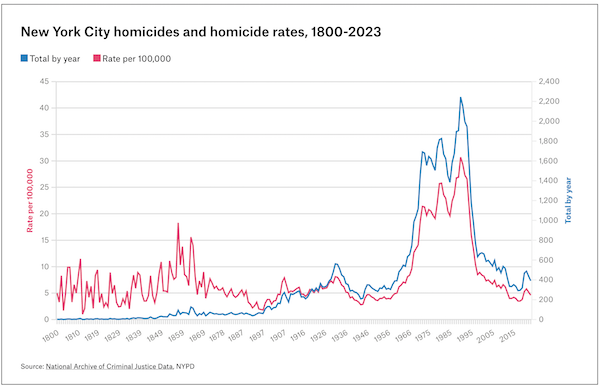
(NYPD data of homicides and homicide rates in New York City from 1800 to 2023)
From 1800 to 1950, the homicide rate in New York City increased by an annual average of .13%.
From 1800 to 1950, the homicide rate in New York City decreased by 20%, from 5 per 100,000 to 4 per 100,000.
In 1800, there were 3 homicides in New York City.
In 1800, the homicide rate in New York City was 5 per 100,000.
In 1803, the homicide rate in New York City was 5 per 100,000.
From 1812 to 1991, the homicide rate in New York City increased by an annual average of 7.5%.
From 1812 to 1991, the homicide rate in New York City increased by 1,350%, or by more than fourteen times, from 2 per 100,000, the fewest in history, to 29 per 100,000, the greatest in history.
In 1812, the homicide rate in New York City was 2 per 100,000, the fewest in history.
In 1823, the homicide rate in New York City was 3 per 100,000.
In 1830, the homicide rate in New York City was 3 per 100,000.
In 1833, the homicide rate in New York City was 5 per 100,000.
In 1846, the homicide rate in New York City was 3 per 100,000.
In 1897, the homicide rate in New York City was 2 per 100,000, the fewest in history, tying the record of 2 per 100,000 set in 1812.
In 1903, the homicide rate in New York City was 4 per 100,000.
In 1928, the homicide rate in New York City was 7 per 100,000.
In 1932, the homicide rate in New YOrk City was 8 per 100,000.
In 1944, the homicide rate in New York City was 3 per 100,000.
From 1950 to 1960, the homicide rate in New York City increased by an annual average of 2.5%.
From 1950 to 1960, the homicide rate in New York City increased by 25%, or by one fourth, from 4 per 100,000 to 5 per 100,000.
In 1950, the homicide rate in New York City was 4 per 100,000, tying the rate of 4 per 100,000 recorded in 1903, and 20% lower than the rate of 5 per 100,000 recorded in 1800, the earliest in the data set.
From 1960 to 1970, the homicide rate in New York City increased by an annual average of 18%.
From 1960 to 1970, the 18% average annual increase in the homicide rate in New York City was 620% greater, or more than seven times greater than its 2.5% average annual increase from 1950 to 1960.
From 1960 to 1970, the 18% average annual increase in the homicide rate in New York City was 13,746.1% greater, or more than one hundred forty times greater than its .13% average annual increase from 1800 to 1950.
We’ve learned that the homicide rate in New York City decreased by 20% from 1800 to 1950, and then suddenly increased by a hyper-exponential 25% from 1950 to 1960.
If moral and mental health vary directly with the health of the ether, then here we can see that microwave television transmissions in the 1960’s had a sudden and highly negative impact on the health of the ether, a negative impact which was hyper-exponentially greater than the damage done to the ether previously by radio transmissions, radar, telephone and telegraph lines, high-tension power lines, et al.
From 1960 to 1970, the homicide rate in New York City increased by 180%, or by almost three times, from 5 per 100,000 to 14 per 100,000.
In 1960, the homicide rate in New York City was 5 per 100,000.
From 1970 to 1980, the homicide rate in New York City increased by an annual average of 8.5%.
From 1970 to 1980, the 8.5% average annual increase in the homicide rate in New York City was 52.7% less, or basically half again less than its 18% average annual increase from 1960 to 1970.
While a homicide rate which nearly doubled in New York from 1970 to 1980 is horrific, nonetheless its rate of increase has slowed exponentially, documenting the inexorably-improving health of the ether, despite technology’s best efforts to undermine it.
From 1970 to 1980, the homicide rate in New York City increased by 85.7%, or by almost two times, from 14 per 100,000 to 26 per 100,000.
In 1970, the homicide rate in New York City was 14 per 100,000.
From 1980 to 1991, the homicide rate in New York City decreased by an annual average of 1%.
From 1980 to 1991, the homicide rate in New York City increased by 11.5%, from 26 per 100,000 to 29 per 100,000.
From 1980 to 1991, the 1% average annual increase in the homicide rate in New York City was 88.2% less, or almost two times less than its 8.5% average annual increase from 1970 to 1980.
From 1980 to 1991, the 88.2% negative variance in the increase in the homicide rate in New York City versus 1970 to 1980 was 67.4% greater, or basically two thirds greater than its 52.7% negative variance from 1970 to 1980 versus 1960 to 1970.
While the grim peak of the homicide rate in New York City in 1991 is horrific, nonetheless its rate of increase has once again slowed exponentially from 1980 to 1991, and to a far-greater degree, documenting the inexorably-improving health of the ether, despite technology’s best efforts to undermine it.
In 1980, the homicide rate in New York City was 26 per 100,000.
From 1990 to 1998, homicides in New York City decreased by an annual average of 9%.
From 1990 to 1998, homicides in New York City decreased by 71.8%, from 2,245 to 633.
If moral and mental health vary directly with the health of the ether, then this sudden, exponential increase in the health of the ether from 1990 to 1998 was the reason for the creation and deployment of what we collectively refer to as wireless technology in the mid to late 1990, in an effort similar to the Manhattan Project’s creation of nuclear weapons during World War II.
In 1990, there were 2,245 homicides in New York City, the greatest number in history.
From 1991 to 2000, the homicide rate in New York City decreased by an annual average of 8%.
From 1991 to 2000, the homicide rate in New York City decreased by 72.4%, or by almost three fourths, from 29 per 100,000, the greatest in history, to 8 per 100,000, or back down to the level last documented in 1932.
In 1991, the homicide rate in New York City was 29 per 100,000, the greatest in history.
In 1991, the homicide rate in New York City of 29 per 100,000 was 1,350% greater, or more than fourteen times greater than its all-time low of 2 per 100,000 in 1812.
From 1998 to 2023, the homicide rate in New York City decreased by an annual average of 1.8%.
From 1998 to 2023, the homicide rate in New York City decreased by 44.4%, or by almost half, from 9 per 100,000 to 5 per 100,000.
From 1998 to 2021, homicides in New York City decreased by an annual average of 1%.
From 1998 to 2021, the 1% average annual decrease in homicides in New York City was 88.8% less than their 9% average annual decrease from their all-time high in 1990 to 1998.
This statistic documents the successful, intentional degradation of the health of the ether by wireless technology.
From 1998 to 2021, homicides in New York City decreased by 22.9%, from 633 to 488.
In 1998, there were 633 homicides in New York City.
In 1998, the homicide rate in New York City was 9 per 100,000, a rate last documented in 1869.
From 2000 to 2010, the homicide rate in New York City decreased by an annual average of 1.25%.
From 2000 to 2010, the homicide rate in New York City decreased by 12.5%, from 8 per 100,000 to 7 per 100,000, a rate last documented in 1928.
Recall that 2000’s rate of 8 per 100,000 was last documented in 1932. The health of the ether is improving, returning to what it was prior to being deliberately degraded by what we collectively refer to as “technology” (telephone, telegraph, electricity in all its forms, including electric lights; radar, then on into television, et al).
From 2000 to 2010, the 1.25% average annual decrease in the homicide rate in New York City was 84.4% less, or almost two times less than its 8% average annual decrease from 1991 to 2000.
Here, from 2000 to 2010, the rate of the decrease in homicides in New York City has once again slowed exponentially, thanks to the deleterious effect of wireless technology upon the health of the ether.
In 2000, the homicide rate in New York City was 8 per 100,000.
In 2000, the homicide rate in New York City of 8 per 100,000 was identical to the rate of 8 per 100,000 last documented in 1932.
From 2010 to 2020, the homicide rate in New York City decreased by an annual average of 2.9%.
From 2010 to 2020, the homicide rate in New York City decreased by 28.5%, from 7 per 100,000, a rate last documented in 1928, to 5 per 100,000, a rate last documented in 1960, and prior to that in 1833.
From 2010 to 2020, the 2.9% decrease in the homicide rate in New York City was 123% greater, or more than two times greater than its 1.3% average annual decrease from 2000 to 2010.
The homicide rate in New York City is decreasing exponentially, because the health of the ether is inexorably improving, and moral and mental health vary directly with the health of the ether.
It is signal to note that this exponential change got underway in earnest from 2010 to 2020, specifically in 2012, the year that the Mayan long count ended.
In 2010, the homicide rate in New York City was 7 per 100,000
In 2014, there were 333 murders in New York City, the fewest in history.
From January 2014 to May 2014 to January 2025 to May 2025, shootings in New York City decreased by 1.2%, from 267 to 264. Both years were all-time record lows.
From January 2014 to May 2014 to January 2025 to May 2025, murders in New York City decreased by .9%, from 113 to 112. Both years were all-time record lows.
From 2015 to 2016, major felonies in New York City decreased by 4.1% to some amount obfuscated by the Christian Science Monitor’s Harry Bruinius, to the fewest in history.
From 2015 to 2016, murders in New York City decreased by 4.8%, from 352 to 335.
The Christian Science Monitor’s Harry Bruinius omitted the percentage decrease, and referred to it only-generally as a “drop”.
Those are examples of the propaganda technique known as “stonewalling”.
Here’s Harry Bruinius’ picture, in a Satanic-purple scarf.

(The Christian Science Monitor’s Harry Bruinius)
I have included Harry Bruinius’ picture so that you could get a better idea of what a generational Satanist Freemason of marginal influence looks like.
They are all related to one another through the maternal bloodline. Generational Satanists comprise between twenty and thirty percent of the populace, and are hiding in plain sight in every city, town and village on Earth.
It’s how the few have controlled the many all the way back to Babylon, and before.
But they say that the hardest part of solving a problem is recognizing that you have one.
Don Croft used to say “Parasites fear exposure above all else”.
How long do you think that these people have left in power, now?
Please consider doing what you can to help speed the transition.
In 2016, there were 335 murders in New York City.
In 2016, there were 998 shootings in New York City, the fewest in history.
From May 2019 to May 2025, shootings in New York decreased by 11.5%, from 61 to 54. Both years were all-time record lows.
In 2017, the homicide rate in New York City was 3.2 per 100,000.
From May 2019 to murders in New York decreased by 5.3%, from 19 to 18. Both years were all-time record lows.
From 2020 to 2023, the homicide rate in New York City decreased by an annual average of 13.3%.
From 2020 to 2023, the homicide rate in New York City decreased by 40%, from 5 per 100,000 to 3 per 100,000.
From 2020 to 2023, the 356.8% positive variance in the decrease in the homicide rate in New York City versus 2010 to 2020 was 190% greater, or almost three times greater than its 123% positive variance from 2010 to 2020 versus 2000 to 2010.
The homicide rate in New York City is decreasing exponentially, because the health of the ether is inexorably improving, and moral and mental health vary directly with the health of the ether.
From 2020 to 2023, the 13.3% average annual decrease in the homicide rate in New York City was 356.8% greater, or more than four and a half times greater than its 2.9% average annual decrease from 2010 to 2020.
The homicide rate in New York City is decreasing exponentially, because the health of the ether is inexorably improving, and moral and mental health vary directly with the health of the ether.
From 2020 to 2023, the 13.3% average annual decrease in the homicide rate in New York City was 638.8% greater, or more than seven times greater than its 1.8% average annual decrease from 1998 to 2023.
The homicide rate in New York City is decreasing exponentially, because the health of the ether is inexorably improving, and moral and mental health vary directly with the health of the ether.
In 2020, the homicide rate in New York City was 5.2 per 100,000, tying the rate of 5 per 100,000 recorded in 1960, 1833 and 1803.
From 2021 to 2024, homicides in New York City decreased by an annual average of 7.6%.
From 2021 to 2024, homicides in New York City decreased by 22.7%, from 488 to 377.
From 2021 to 2024, the 7.6% average annual decrease in homicides in New York City was 660% greater, or more than seven times greater than their 1% average annual decrease from 1998 to 2021.
Homicides in New York City are decreasing exponentially because the health of the ether is inexorably improving, and moral and mental health vary directly with the health of the ether.
In 2021, New York City recorded 488 homicides.
From 2022 to 2024, the homicide rate in New York City decreased by an annual average of 13.5%.
From 2022 to 2024, the homicide rate in New York City decreased by 26.9%, or by almost one third, from 5.2 per 100,000 to 3.8 per 100,000.
From 2022 to 2023, the homicide rate in New York City decreased by 21.1%, from 5.2 per 100,000 to 4.1 per 100,000.
In 2022, New York City recorded 438 homicides.
In 2022, the homicide rate in New York City was 5.2 per 100,000.
From 2023 to 2024, the homicide rate in New York City decreased by 7.3%, from 4.1 per 100,000 to 3.8 per 100,000.
In 2023, New York City recorded 386 homicides.
In 2023, the homicide rate in New York City was 4.1 per 100,000, tying the rate of 3 per 100,000 recorded in 1944, 1846 and 1830.
In 2024, New York City recorded 377 homicides.
In 2024, the homicide rate in New York City was 3.8 per 100,000.
From January 2025 to June 2025, homicides in New York City decreased by 46%, year-over-year.
From January 2025 to June 2025, the 46% year-over-year decrease in homicides in New York City was 505.2% greater, or more than six times greater then the 7.6% average annual decrease in homicides in New York City from 2021 to 2024.
Homicides in New York City are decreasing exponentially, because the health of the ether is inexorably improving, and moral and mental health vary directly with the health of the ether.
Given that efforts to memory-hole myself and my material will be ongoing, I thought I’d begin including pictures of myself with my articles, so that they are part of the record.
Don Croft always used to say that keeping a high public profile was important, and always underscored the impact that one person of conscience can have within the bigger picture.
The picture below is from Pittsburgh, PA from twelve years ago, in 2013, of myself and my cat Belle.
2013 is the year I began writing this series of articles, entitled “Positive Changes That Are Occurring”, on Don Croft’s Etheric Warriors forum.
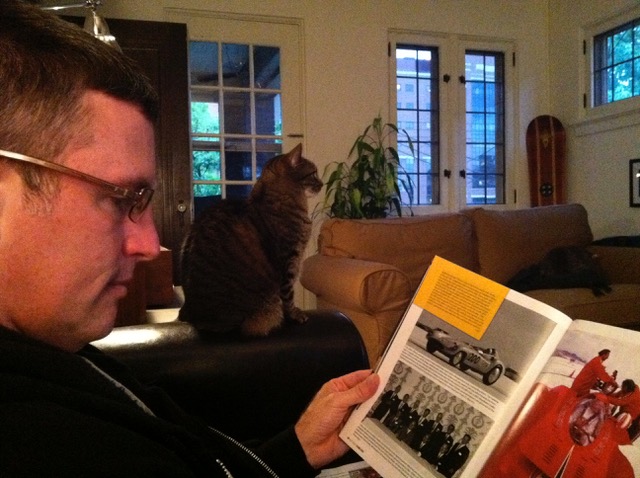
(Jeff Miller and Belle, Pittsburgh, PA, 2013)
Jeff Miller, Pittsburgh, PA, October 21, 2025
If you’d like to be added to this free mailing list, or know someone who would be, please send me a note at [email protected].