“The best revenge is not to be like your enemy.”
– Marcus Aurelius
This is what was known in the old days as “Science”, and also “hard-hitting journalism”.
From 1992 to 2017, new cases of invasive breast cancer among U.S. women increased by an annual average of 1.5%.
From 1992 to 2017, new cases of invasive breast cancer among U.S. women increased by 36.7%, or by more than one third, from 184,300 to 252,000.
From 1992 to 2017, breast cancer deaths among women in the United States decreased by 5.7%, or by 2,453 deaths, from 43,063 to 40,610.
From 1992 to 1996, breast cancer deaths among women in the United States increased by an annual average of .7%.
From 1992 to 1996, breast cancer deaths among women in the United States increased by 2.9%, from 43,063 to 44,300.
In 1992, a total of 43,063 U.S. women died from breast cancer, per cdc.gov.
In 1992, the death rate from breast cancer among women in the United States was 129.83 per 100,000, per seer.cancer.gov.
In 1992, the 43,063 deaths from breast cancer in U.S. women represented 23.3% of the 184,300 new cases of invasive breast cancer among U.S. women.
From 1992 to 2006, the death rate from breast cancer in U.S. women decreased by an annual average of 1.3%
From 1992 to 2006, the death rate from breast cancer in U.S. women decreased by 17.6%, from 23.3% of new cases of invasive breast cancer to 19.2%.
In 1996, there were an estimated 184,300 new cases of invasive breast cancer among U.S. women.
In 1996, 44,300 U.S. women died from breast cancer.
From 2000 to 2025, new cases of invasive breast cancer among U.S. women increased by 73.3%, or by basically three fourths, or by 135,150 cases, from 182,800 to 316,950.
In 2000, “Breast cancer alone is expected to account for 182,800 new cancer cases (30%)”, per 1st author Robert T. Greenlee MPH in CA: A Cancer Journal for Clinicians, 2000.
From 2006 to 2015, new cases of invasive breast cancer among U.S. women increased by an annual average of 1%.
From 2006 to 2015, new cases of invasive breast cancer among U.S. women increased by 8.9%, or by 18,920 cases, from 212,920 to 231,840.
From 2006 to 2007, new cases of invasive breast cancer among U.S. women decreased by 16.1%, or by cases, from 212,920 to 178,480.
From 2006 to 2007, the death rate from breast cancer in U.S. women increased by 18.2%, or by almost one fifth, from 19.2% to 22.7%.
From 2006 to 2007, the 18.2 increase in the death rate from breast cancer in U.S. women was 213% greater, or more than three times greater than the 16.1% decrease in new cases of invasive breast cancer among U.S. women.
Breast cancer mortality is increasing exponentially because radiation from wireless technology and annual breast exams causes breast cancer, and the damage from that radiation is cumulative and dose-dependent.
In 2006, there were an estimated 212,920 new cases of breast cancer in U.S. women.
In 2006, there were 40,970 deaths from breast cancer in U.S. women.
In 2006, the 40,970 deaths from breast cancer in U.S. women represented 19.2% of the 212,920 new cases of invasive breast cancer among U.S. women.
From 2007 to 2011, the death rate from breast cancer among women in the United States decreased by an annual average of 6.2%.
From 2007 to 2011, the death rate from breast cancer among women in the United States decreased by 24.7%, from 22.7% to 17.1%.
From 2007 to 2008, new cases of invasive breast cancer among U.S. women increased by 2.2%, or by 3,980 cases, from 178,480 to 182,460.
From 2007 to 2008, the death rate from breast cancer in U.S. women decreased by 2.2%, from 22.7% to 22.2%.
In 2007, there were 40,460 deaths from breast cancer in U.S. women.
In 2007, there were an estimated 178,480 new cases of breast cancer in U.S. women.
In 2007, the 40,460 deaths from breast cancer in U.S. women represented 22.7% of the 178,480 new cases of invasive breast cancer among U.S. women.
From 2008 to 2009, breast cancer deaths among U.S. women decreased by .8%, or by 310 deaths, from 40,480 to 40,170,
From 2008 to 2009, new cases of invasive breast cancer among U.S. women increased by 5.4%, or by 9,910 cases, from 182,460 cases to 192,370 cases.
From 2008 to 2009, the 5.4% increase in new cases of invasive breast cancer among U.S. women was 145.5% greater, or more than two times greater than their 2.2% increase from 2007 to 2008.
Breast cancer is increasing exponentially because radiation from wireless technology and annual breast exams causes breast cancer, and the damage from that radiation is cumulative and dose-dependent.
In 2008, there were 40,480 deaths from breast cancer among U.S. women.
In 2008, the 40,480 deaths from breast cancer in U.S. women represented 22.2% of the 182,460 new cases of invasive breast cancer among U.S. women.
From 2009 to 2015, new cases of invasive breast cancer among U.S. women increased by an annual average of 3.4%.
From 2009 to 2015, new cases of invasive breast cancer among U.S. women increased by 20.5%, or by 39,470 cancers, from 192,370 to 231,840.
In 2009, 40,170 U.S. women died from breast cancer.
In 2009, there were an estimated 192,370 new cases of breast cancer in U.S. women [85].
From 2011 to 2012, new cases of invasive breast cancer in women in the United States decreased by 2.7%, or by 6,333 cases, from 230,480 to 224,147.
In 2011, 39,520 women in the United States died from breast cancer.
In 2011, there were 230,480 new cases of invasive breast cancer in women in the United States.
In 2011, the 39,520 deaths from breast cancer in U.S. women represented 17.1% of the 230,480 new cases of invasive breast cancer among U.S. women.
From 2011 to 2022, the death rate from breast cancer in U.S. women decreased by an annual average of .85%, from 17.1% to 15.5%.
From 2011 to 2022, the death rate from breast cancer in U.S. women decreased by 9.4%, from 17.1% to 15.5%.
From 2011 to 2022, the average annual decrease in the death rate from breast cancer in U.S. women was 34.6% less, or more than one third less than its 1.3% average annual decrease from 1992 to 2006.
In 2012, there were 224,147 new cases of invasive breast cancer in women in the United States.
From 2012 to 2013, new cases of invasive breast cancer in women in the United States increased by 3.7%, or by 8,193 cases, from 224,147 to 232,340.
From 2012 to 2013, the 3.7% increase in new cases of invasive breast cancer in women in the United States was 237% greater, or more than three times greater than their 2.7% decrease from 2011 to 2012.
Breast cancer is increasing exponentially because radiation from wireless technology and annual breast exams causes breast cancer, and the damage from that radiation is cumulative and dose-dependent.
From 2013 to 2015, breast cancer deaths among U.S. women increased by an annual average of .85%.
From 2013 to 2014, new cases of invasive breast cancer among U.S. women increased by .1%, or by 330 cancers, from 232,340 to 232,670.
From 2013 to 2014, the .85% (average) increase in breast cancer deaths among U.S. women was 750% greater, or eight and a half times greater than the .1% increase in new cases of invasive breast cancer among U.S. women.
Breast cancer mortality is increasing exponentially because radiation from wireless technology and annual breast exams causes breast cancer, and the damage from that radiation is cumulative and dose-dependent.
From 2013 to 2015, deaths from breast cancer among U.S. women increased by 1.7%, from 39,620 to 40,290.
In 2013, 39,620 women in the United States died from breast cancer.
In 2013, Approximately there were 232,340 new cases of invasive breast cancer in U.S. women.
In 2013, the 39,620 deaths from breast cancer in U.S. women represented 17% of the 232,340 new cases of invasive breast cancer among U.S. women.
From 2014 to 2015, new cases of invasive breast cancer among U.S. women decreased by .4%, or by 830 cancers, from 232,670 to 231,840.
From 2014 to 2015, the death rate from breast cancer in U.S. women decreased by 16%, from 20.74% to 17.4%.
In 2014, there were 232,670 new cases of invasive breast cancer among U.S. women.
From 2015 to 2016, new cases of invasive breast cancer among U.S. women increased by 6.4%, or by 14,760 cancers, from 231,840 to 246,600.
From 2015 to 1016, the 6.4% increase in new cases of invasive breast cancer among U.S. women was 88.2% greater, or almost two times greater than its 3.4% average annual increase from 2009 to 2015.
From 2015 to 1016, the 6.4% increase in new cases of invasive breast cancer among U.S. women was 540% greater, or more than six times greater than their 1% average annual increase from 2006 to 2015.
From 2015 to 1016, the 6.4% increase in new cases of invasive breast cancer among U.S. women was 1,700% greater, or eighteen times greater than their .4% decrease from 2014 to 2015.
Breast cancer is increasing exponentially because radiation from wireless technology and annual breast exams causes breast cancer, and the damage from that radiation is cumulative and dose-dependent.
In 2015, there were 40,290 breast cancer deaths among U.S. women.
In 2015, there were 231,840 new cases of invasive breast cancer among U.S. women.
In 2015, the 40,290 deaths from breast cancer in U.S. women represented 17.4% of the 231,840 new cases of invasive breast cancer among U.S. women.
From 2016 to 2017, new cases of invasive breast cancer were diagnosed among women in the United States increased by 2.2%, or by 5,400 cancers, from 246,600 to 252,000.
In 2016, an estimated 246,660 new cases of invasive breast cancer were diagnosed among women in the United States.
From 2017 to 2025, new cases of invasive breast cancer among U.S. women increased by an annual average of 3.3%
From 2017 to 2025, the 3.3% average annual increase in new cases of invasive breast cancer among U.S. women was 120% greater, or more than two times greater than their 1.5% average annual increase from 1992 to 2017.
Breast cancer is increasing exponentially because radiation from wireless technology and annual breast exams causes breast cancer, and the damage from that radiation is cumulative and dose-dependent.
From 2017 to 2025, new cases of invasive breast cancer among U.S. women increased by 25.8%, or by 64,950 cancers, from 252,000 to 316,950.
From 1992 to 2017, new cases of invasive breast cancer among U.S. women increased by an annual average of 1.5%.
From 2017 to 2019 new cases of invasive breast cancer among women in the United States increased by an annual average of 3.2%.
From 2017 to 2019, the 3.2% average annual increase in invasive breast cancer among women in the United States was 45.5% greater, or basically half again greater than its 2.2% increase from 2016 to 2017.
Breast cancer is increasing exponentially because radiation from wireless technology and annual breast exams causes breast cancer, and the damage from that radiation is cumulative and dose-dependent.
In 2017, an uncredited article on breastcancer.org said “A new American Cancer Society report says that the number of women who died from breast cancer dropped about 40% in the past 25 years”.
When, in fact, in the 25 years from 1992 to 2017, breast cancer deaths among women in the United States decreased by 5.7%, or by 2,453 deaths, from 43,063 to 40,610, not the "about 40% falsely claimed by breastcancer.org.
Here, breastcancer.org took an actual 5.7% decrease in breast cancer deaths and fraudulently inflated it by 601%, or by more than seven times, to a fictitious “about 40%”.
I have exposed the duplicity of breastcancer.org by using what was known in the old days as “fact checking”.
The uncredited author from breastcancer.org said “dropped” instead of “decreased” as a thinly-veiled reference to the fallen Lord Lucifer.

(The fall of Lucifer, from “Paradise Lost”, by John Milton, 1667)
For those unaware, anytime an author is uncredited, it is proof that said author is an Intelligence operative.
The American Cancer Society and breastcancer.org are desperately trying to distract you from the fact that, from 1992 to 2017, new cases of invasive breast cancer among U.S. women increased by 36.7%, or by more than one third, from 184,300 to 252,000.
From 2017 to 2019, new cases of invasive breast cancer among women in the United States increased by 6.3%, from 252,000 to 268,600.
In 2017, there were 40,610 breast cancer deaths among women in the United States.
In 2017, 252,000 new cases of invasive breast cancer were diagnosed among women in the United States.
In 2017, the 40,610 deaths from breast cancer in U.S. women represented 16.1% of the 252,000 new cases of invasive breast cancer among U.S. women.
From 2019 to 2021, life expectancy in the United States decreased by 3.3%, from 79 years to 76.4 years.
In 2019, life expectancy in the United states was 79 years.
From 2019 to 2020, new cases of invasive breast cancer were diagnosed among women in the United States increased by 2.9%, or by 7,880 cancers, from 268,600 to 276,480.
In 2019, an estimated 268,600 new cases of invasive breast cancer were diagnosed among women in the United States.
From 2020 to 2022, new breast cancers among females in the United States increased by an annual average of .6%.
From 2020 to 2022, new breast cancers among females in the United States increased by 1.2%, or by 3,251 cancers, from 276,480 to 279,731.
In 2020, an estimated 276,480 new cases of invasive breast cancer were diagnosed in women in the U.S.
In 2020, life expectancy in the United States was 77 years.
In 2020, breast cancer among Taiwanese women with smartphone addiction was 143% greater, or more than two times greater than it was among controls, per 1st author Ya-Wen Shih in “The Association Between Smartphone Use and Breast Cancer Risk Among Taiwanese Women: A Case-Control Study”, published in the journal Cancer Management and Research, October 2020.
This statistic proves that smartphones cause breast cancer.
In 2020, breast cancer among Taiwanese women who carried their smartphone near their waists was 500% greater, or six times greater than it was among those who carried their smarphone below the waist, per 1st author Ya-Wen Shih in “The Association Between Smartphone Use and Breast Cancer Risk Among Taiwanese Women: A Case-Control Study”, published in the journal Cancer Management and Research, October 2020.
This statistic proves that smartphones cause breast cancer.
In 2020, breast cancer among Taiwanese women who used their smartphone for greater than 4.5 minutes before bedtime was 527% greater, or more than six times greater than those who used a smartphone for less than or equal to 4.5 minutes before bedtime, per 1st author Ya-Wen Shih in “The Association Between Smartphone Use and Breast Cancer Risk Among Taiwanese Women: A Case-Control Study”, published in the journal Cancer Management and Research, October 2020.
This statistic proves that smartphones cause breast cancer.
In 2020, breast cancer among Taiwanese women who carried their smartphone near their breasts was 603% greater, or basically seven times greater than those who carried their smartphone below the waist, per 1st author Ya-Wen Shih in “The Association Between Smartphone Use and Breast Cancer Risk Among Taiwanese Women: A Case-Control Study”, published in the journal Cancer Management and Research, October 2020.
This statistic proves that smartphones cause breast cancer.
In 2021, life expectancy in the United States was 76.4 years.
From 2022 to 2024, new breast cancers among females in the United States increased by an annual average of 5.5%.
From 2022 to 2024, the 5.5% average annual increase in new breast cancers among females in the United States were 816.6% greater, or more than nine times greater than their .6% average annual increase from 2020 to 2022.
Breast cancer is increasing exponentially because radiation from wireless technology and annual breast exams causes breast cancer, and the damage from that radiation is cumulative and dose-dependent.
From 2022 to 2024, new breast cancers among females in the United States increased by 11%, or by 30,989 cancers, from 279,731 to 310,720.
In 2022, 43,250 women died from breast cancer in the United States.
In 2022, the 43,250 women who died from breast cancer in the United States represented 15.5% of the 279,731 new cases of invasive breast cancer among U.S. women.
In 2022, 279,731 new breast cancers were reported in females in the United States.
From 2024 to 2025, new breast cancers among females in the United States increased by 2%, or by 6,230 cancers, from 310,720 to 316,950.
In 2024, there were approximately 310,720 new cases of invasive breast cancer among U.S. women.
In 2024, 42,250 women U.S. women died from breast cancer.
In the US in 2025, there will be an estimated 316,950 new cases of invasive breast cancer diagnosed in women.
In November 2025, a current article on Susan G. Komen’s komen.org says “From 2018 to 2022 (most recent data available), overall breast cancer incidence rates have increased by a little over 1% per year [70].”
When, in fact, from 2018 to 2019, new cases of invasive breast cancer among women in the United States increased by 3.2% (average). Further, From 2019 to 2020, new cases of invasive breast cancer were diagnosed among women in the United States increased by 2.9%. Lastly, from 2020 to 2022, new breast cancers among females in the United States increased by an annual average of .6%.
Ergo, from 2018 to 2022, new cases of breast cancer among women in the United States increased by an annual average of 1.8%.
From 2018 to 2022, the actual 1.8% average annual increase in new cases of breast cancer among women in the United States was 80% greater, or almost two times greater than the fraudulent “a little over 1%” average annual increase stated by Susan G. Komen in November 2025.
On January 17, 2024, an uncredited article published by the National Breast Cancer Foundation said “Myth: Carrying a phone in your bra can cause breast cancer”.
When, in fact, in 2020, breast cancer among Taiwanese women who carried their smartphone near their breasts was 603% greater, or basically seven times greater than those who carried their smartphone below the waist, per 1st author Ya-Wen Shih in “The Association Between Smartphone Use and Breast Cancer Risk Among Taiwanese Women: A Case-Control Study”, published in the journal Cancer Management and Research, October 2020.
I have exposed the duplicity of the National Breast Cancer Foundation by using what was known in the old days as “fact checking”.
Here, the National Breast Cancer Foundation using an example of the propaganda technique known as “the Big Lie”.
“The great masses of the people … will more easily fall victim to a big lie than to a small one. A definite factor in getting a lie believed is the size of the lie, for the broad mass of the people in its primitive simplicity of heart more readily falls victim to a big lie than to a small one.”
From “Mein Kampf”, written by British double-agent Adolf Hitler, 1925
Here’s a picture of Janelle Hail, Founder and CEO of the National Breast Cancer Foundation, in a Satanic-purple suit jacket.

(Janelle Hail, Founder and CEO of the National Breast Cancer Foundation)
I have included her picture so that you could get a better idea of what a generational Satanist Freemason of fairly significant influence looks like.
They all related to one another through the maternal bloodline. Generational Satanists comprise between twenty and thirty percent of the populace, and are hiding in plain sight in every city, town and village on Earth. It’s how the few have controlled the many all the way back to Babylon, and before.
But they say that the hardest part of solving a problem is recognizing that you have one.
Don Croft used to say “Parasites fear exposure above all else”.
How long do you think that these people have left in power, now?
Please consider doing what you can to help speed the transition.
In 2025, breast cancer researcher Susan G. Komen took an actual 1.8% average annual increase in new cases of breast cancer among women in the United States from 2018 to 2022 and decreased by 38.3% it to a fabricated “a little over one percent” (I used 1.1% - ed).
I have exposed the duplicity of breast cancer researcher Susan G. Komen by using what was known in the old days as “fact checking”.
Here’s a picture of the bald-facedly lying breast cancer researcher and activist Susan G. Komen, in a Satanic-purple suit, and where the image is constructed to focus attention on her left eye.
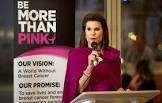
(Susan G. Komen)
To bloodline-linked Illuminists like Susan, the left eye is the “eye of Will” or the “eye of Horus”.
‘The right eye is the Eye of Ra and the left is the Eye of Horus’.”
From “Freemasonry - Religion And Belief - The 3rd Temple”
I have included her picture so that you could get a better idea of what a generational Satanist Freemason of moderate influence looks like.
They all related to one another through the maternal bloodline. Generational Satanists comprise between twenty and thirty percent of the populace, and are hiding in plain sight in every city, town and village on Earth. It’s how the few have controlled the many all the way back to Babylon, and before.
But they say that the hardest part of solving a problem is recognizing that you have one.
Don Croft used to say “Parasites fear exposure above all else”.
How long do you think that these people have left in power, now?
Please consider doing what you can to help speed the transition.
In 2025, the National Breast Cancer Coalition said “Progress in reducing breast cancer mortality has slowed in recent years, from 2% to 3% annually during the 1990s and 2000s to 1% annually from 2010 to 2022. (ACS, 2024, Siegel et al., 2025)”.
That is a Satanic inversion covering up the truth that “breast cancer mortality has increased exponentially in recent years”.
When, in fact, from 2011 to 2022, the average annual decrease in the death rate from breast cancer in U.S. women was 34.6% less, or more than one third less than its 1.3% average annual decrease from 1992 to 2006.
In 2025, the National Breast Cancer Coalition took an actual 1.3% average annual decrease in the death rate from breast cancer in U.S. women and fraudulently increased it by between 53.8% and 130.7% to a fictitious “from 2% to 3%”.
I have exposed the duplicity of the National Breast Cancer Coalition by using what was known in the old days as “fact checking”.
In 2025, the National Breast Cancer Coalition said that the breast cancer mortality rate among women in the United States decreased by “1% annually from 2010 to 2022”.
When, in fact, from 2011 to 2022, the death rate from breast cancer in U.S. women decreased by an annual average of .85%.
Here, the National Breast Cancer Coalition took an actual .85% average annual decrease in the death rate from breast cancer in U.S. women and increased it by 17.6%, or by almost one fifth, to a fraudulent 1%.
I have exposed the duplicity of the National Breast Cancer Coalition by using what was known in the old days as “fact checking”.
Here’s a picture of Fran Visco, founder of the National Breast Cancer Coalition, in front of a Satanic-purple curtain, and using a purportedly-secret Masonic “gesture of recognition”.

(Fran Visco, founder of the National Breast Cancer Coalition)
Now here’s a 19th Century depiction of a generational Satanist Freemason using the same purportedly-secret “gesture of recognition” that National Breast Cancer Coalition founder Fran Visco is in the photo immediately above.

(19th Century depiction of a Freemason using a purportedly-secret “gesture of recognition”.)
I have included her picture so that you could get a better idea of what a generational Satanist Freemason of moderate influence looks like.
They all related to one another through the maternal bloodline. Generational Satanists comprise between twenty and thirty percent of the populace, and are hiding in plain sight in every city, town and village on Earth. It’s how the few have controlled the many all the way back to Babylon, and before.
But they say that the hardest part of solving a problem is recognizing that you have one.
Don Croft used to say “Parasites fear exposure above all else”.
How long do you think that these people have left in power, now?
Please consider doing what you can to help speed the transition.
Given that efforts to memory-hole myself and my material will be ongoing, I thought I’d begin including pictures of myself with my articles, so that they are part of the record.
Don Croft always used to say that keeping a high public profile was important, and always underscored the impact that one person of conscience can have within the bigger picture.
The photo below is of me and my cat, Liam, in Pittsburgh in 2025.
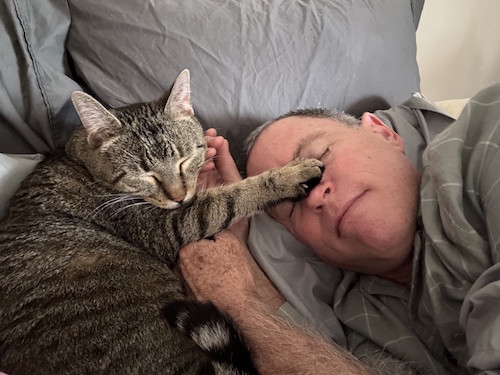
(Jeff Miller and his cat, Liam, Pittsburgh, PA, 2025)
Jeff Miller, Hilo, HI, November 17, 2025
If you’d like to be added to this free mailing list, or know someone who would be, please send me a note at [email protected].